


How to Use Ryne AI with Grammarly for Perfect, Undetectable Content

Creating high-quality digital content with artificial intelligence saves time, but raw AI-generated drafts often fall short before publication. Unedited text frequently sounds repetitive, monotone, or overly formal. To bridge this gap, modern creators pair Ryne AI + Grammarly to turn initial ideas into authoritative, natural-sounding content.
A structured Ryne AI Grammarly workflow allows content teams to generate long-form drafts and refine them for grammar, tone, clarity, and engagement. When used correctly, this powerful AI writing tool stack yields content that reads naturally, satisfies search engine algorithms, and genuinely engages real readers.
However, the main objective should never be just bypassing algorithms. The real focus lies in creating original, well-edited content that serves search intent and provides clear value.
Why Combine Ryne AI and Grammarly?
AI models excel at generating outlines, expanding key points, and drafting baseline paragraphs. However, an unedited output often contains robotic transitions, unnecessary filler words, and awkward sentence structures.
Grammarly acts as an essential secondary editorial layer. It flags mechanical mistakes, corrects subtle punctuation errors, and suggests improvements for tone, clarity, and conciseness.
| Production Stage | Workflow Action | Primary Objective |
|---|---|---|
| 1. Ryne AI Engine | Output initial baseline draft | Establish structural depth & key arguments |
| 2. Human Editorial | Insert context, data, & anecdotes | Inject original experience & vary cadence |
| 3. Grammarly Polish | Clean mechanics, style, & clarity | Remove syntax errors & polish readability |
| 4. Final Review | Verify accuracy & search intent | Ensure search intent & pass final safety checks |
This workflow is far more effective than relying entirely on a single generation tool or a basic spellchecker. For creators who regularly publish blog posts, guides, or landing pages, this approach creates an efficient, repeatable production system.
Step 1: Build a Data-Driven Content Brief
Before opening Ryne AI, build a thorough content brief. A structured brief outlines search intent, audience profile, core headings, and targeted keywords.
For instance, when targeting the primary keyword Ryne AI + Grammarly, your brief should incorporate related semantic terms naturally:
- Ryne AI Grammarly workflow
- AI humanizer plus Grammarly
- Undetectable AI content
- Grammarly AI detector
- Humanize ChatGPT text
- AI writing tool stack
- Plagiarism and AI checker
Avoid forcing these expressions into every paragraph. Modern search engines evaluate topic context and semantic relationships, making natural usage far more effective than keyword density.
Step 2: Generate the Core Draft in Ryne AI
With your brief finalized, use Ryne AI to build the initial draft. Provide exact instructions regarding audience tone, main objectives, heading architecture, and expected depth.
| Prompt Factor | Weak Approach | Optimized SEO Approach |
|---|---|---|
| Instruction Style | "Write a post about Ryne AI and Grammarly." | "Draft a comprehensive guide explaining how Ryne AI and Grammarly form a content pipeline for writers." |
| Output Focus | Surface-level summary | Structural depth, concise examples, and logical transitions |
| Target Result | Generic AI output | High-quality baseline ready for human polish |
Treat the initial draft as a foundation, not a finished product. Even accurate drafts require human oversight and factual verification before going live.
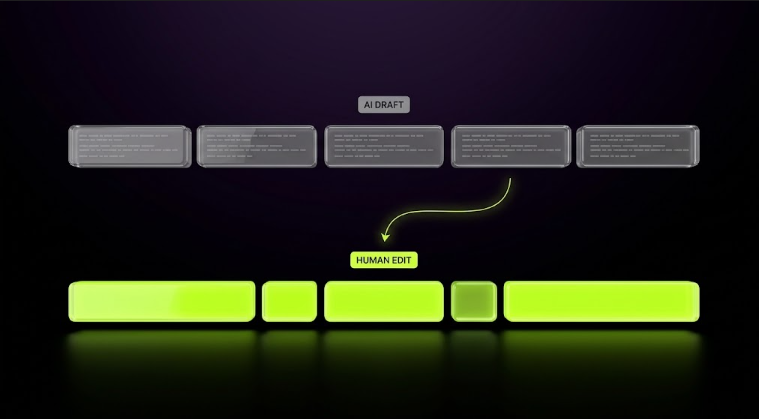
Step 3: Apply Hands-On Human Editorial Review
This stage separates generic output from top-ranking articles. If your goal is to humanize ChatGPT text, simply swapping words with synonyms is insufficient. Strategic editing focuses on refining ideas for human readers.
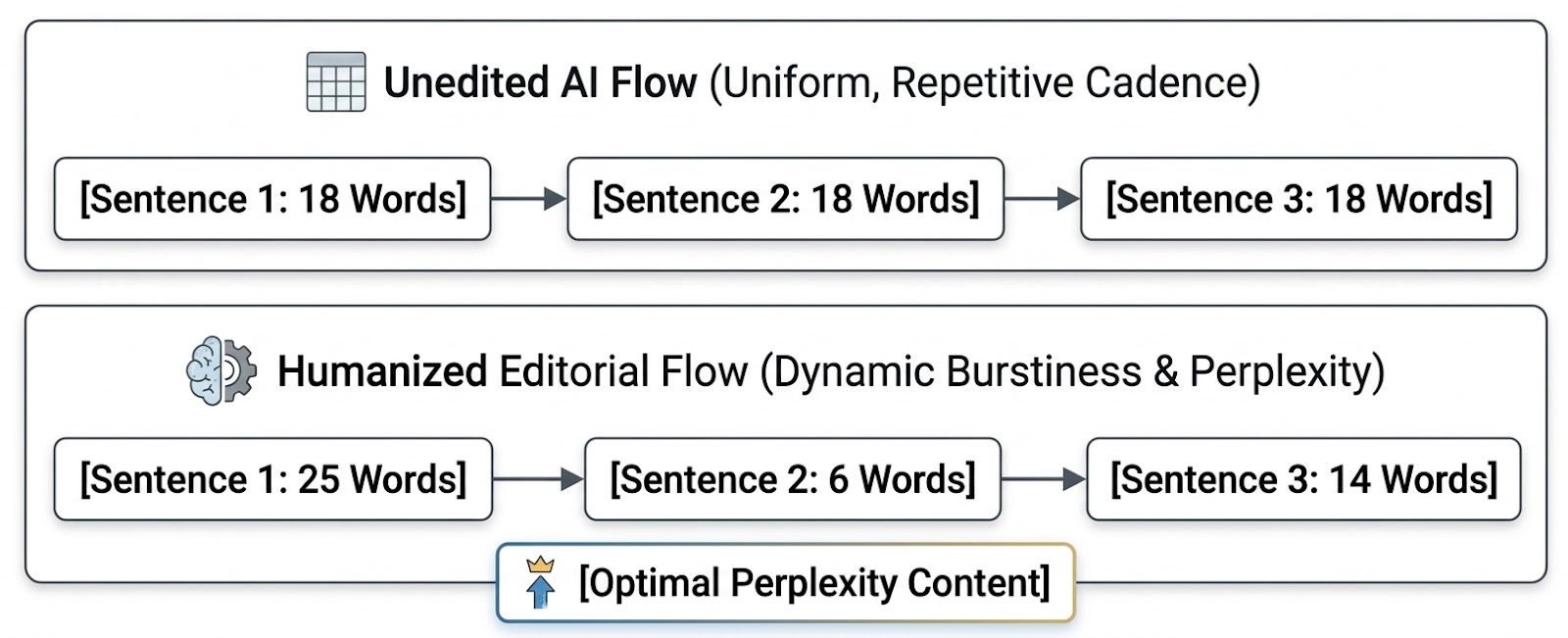
Review the draft to eliminate:
- Repetitive conceptual loops
- Generic introductory fluff
- Passive phrasing and awkward transitions
- Unsubstantiated claims or outdated data
Inject real-world examples, personal insights, and specific observations. The most reliable method to publish undetectable AI content is incorporating genuine human expertise, accurate data, and a dynamic writing rhythm.
Step 4: Refine Mechanics with Grammarly
After hands-on editing, move the draft into Grammarly. This is where combining an AI humanizer plus Grammarly proves its worth by catching technical errors, typos, and awkward phrasing that human editors miss during quick scans.
Review suggestions individually rather than accepting all automated changes. If Grammarly recommends shortening a complex sentence that preserves your brand voice, keep your original phrasing. The platform assists the writer; it does not replace editorial judgment.
Step 5: Optimize Tone and Structural Cadence
A grammatically flawless piece can still feel monotone. After resolving basic corrections, review the entire article from the reader’s perspective.
Evaluate your content using key criteria:
- Natural Flow: Does the text read smoothly when spoken aloud?
- Value Density: Does every subsegment answer a concrete question?
- Visual Formatting: Are key concepts broken down with bullet points and comparison tables?
- Introductory Hook: Does the opening jump straight into the solution without fluff?
Direct answers and clean visual formatting immediately signal quality to both readers and search engine crawlers.
Step 6: Verify Content with Plagiarism and Safety Scans
Before publishing, evaluate the material using an integrated plagiarism and AI checker.
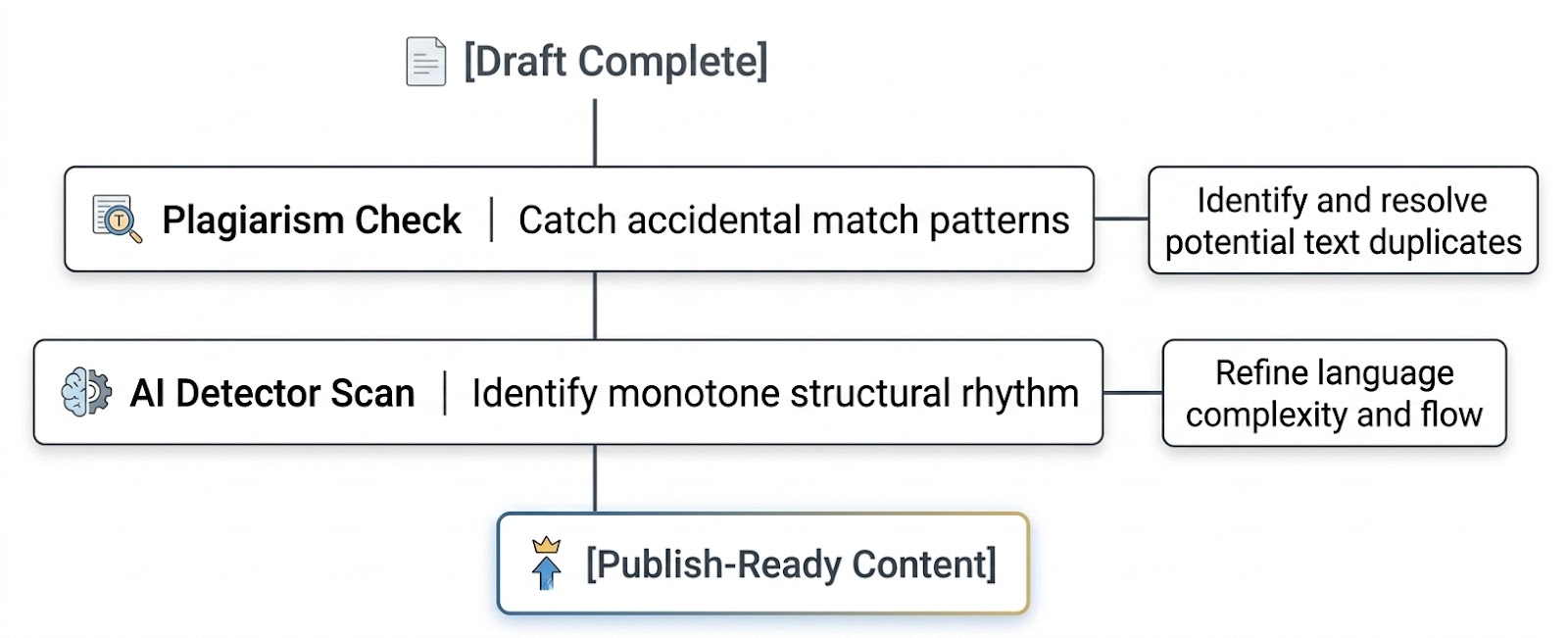
Plagiarism scans protect your domain from accidental overlap caused by generic phrasing. Meanwhile, running a Grammarly AI detector or third-party scan provides a baseline signal regarding text rhythm.
Use these tools strictly as quality checks, not absolute rules. Focus on original insights and clarity rather than obsessing over an automated detection score.
SEO Best Practices for the Ryne AI Stack
Simply using modern software will not rank an article on page one. True search engine optimization requires matching search intent and organizing page elements cleanly.
- Targeted Title Tag & H1: Include the primary keyword cleanly in the title and main heading.
- Logical Heading Architecture: Organize thoughts hierarchically using H2 and H3 subheadings.
- High Scannability: Use Markdown tables, callout blocks, and bullet lists to present data clearly.
- Semantic Keyword Integration: Integrate phrases—such as polish AI drafts, AI humanizer plus Grammarly, and Ryne AI Grammarly workflow—naturally throughout the body text.
Common Mistakes to Avoid in AI Workflows
- Publishing Raw Drafts: Unassisted tools hallucinate facts, invent statistics, and repeat redundant phrasing.
- Accepting Every Grammar Suggestion: Blanket acceptance turns dynamic, humanized phrasing back into rigid, predictable text patterns.
- Prioritizing Metrics Over Readers: Content optimized strictly for algorithms or detection tools often fails to retain human interest. Focus on audience intent first.
Summary
The Ryne AI + Grammarly workflow provides a high-velocity publishing pipeline for modern content teams. Ryne AI accelerates initial drafting, while Grammarly ensures mechanical accuracy, clarity, and tone consistency. By placing human editorial judgment at the center of this workflow, you can publish polished, engaging, and top-ranking articles that deliver real value to your audience.


How AI Detectors Actually Work: A Technical Deep Dive (Non-Jargon)
Curious how AI detectors flag your content? Discover how perplexity, burstiness, and classifier models work and why false positives happen.

Free vs Paid AI Humanizer 2026 Comparison: Is the Upgrade a Wise Purchase?
Compare Free vs Paid AI Humanizers in 2026. Explore pricing structures, bypass rates, feature differences, and discover if an upgrade is worth it.