


How to Improve Academic Writing with AI Tools

You’re already aware of the rigged game. Professors expect perfect publication ready papers. Things are getting busy at a fast rate. And the truth that is never spoken? Students who are doing well are not necessarily more intelligent. Using an AI writing assistant changes everything about your academic writing, but only if you know how to use one without detection software and one that doesn’t sound like a robot when detected.
This manual provides the complete set of instructions for improving academic writing through the use of AI tools. Not the watered down version that says “use AI responsibly”. But the actual tips that turn mediocre drafts into A-grade papers and make sure your work is undiscovered and legit.
Try Ryne AI free to see what a proper AI writing helper actually looks like.
What Is Ryne AI writing Helper and Why It Changes Academic Writing Forever
An AI writing helper uses artificial intelligence to help you create, improve, or polish written text according to your requirements. It is just what it sounds like. Unfortunately, most students don’t realize this. They use these tools as essay generators and not as what they are. That is, sophisticated writing partners that enhance your current abilities.
The best AI writing helpers do six things exceptionally well: idea generation, content structuring, literature synthesis, data management, editing, and ensuring ethical compliance. That's not speculation. A 2025 systematic review published in ScienceDirect confirmed that AI enhances academic writing in precisely these six areas, fundamentally reshaping how students approach the writing process.
The difference matters. Knowing what an AI writing helper does or does not do will determine whether you use it to your advantage, or waste time generating rubbish that Turnitin flags. You can use these tools to analyze patterns, suggest improvements, identify weaknesses in your arguments, and structure. They do not think on your behalf. They motivate you to think better.
Professional athletes leverage performance analytics to improve their performances. The use of data by all organizations identifies weaknesses and improves training, not algorithms. An AI writing assistant functions similarly when it comes to academic writing. It finds the faults in your writing and shows you how to fix them.
The shift happening in universities right now is staggering. According to research conducted at the National University of Science and Technology POLITEHNICA Bucharest and published in the journal Education Sciences, 95.6% of students now use AI technologies in their academic activities. This isn't a trend anymore—it's the new baseline. The question isn't whether to use AI tools. The question is whether you're using them correctly.
The Real Reason AI Writing Helps (And Why Most Students Miss It)
When it comes to using ChatGPT, students often paste the assignment prompt into the tool, copy whatever comes out and wonder why it is getting flagged for AI detection or poor grades. They’ve got a fundamental misapprehension of what an AI writing helper does.
In fact, AI won’t compose a superior paper for you. You become better in making own papers. According to the same MDPI study, 83.5 percent of respondents reported that AI enhanced their learning efficiency by providing quick access to educational resources and reducing time spent on research while also organizing their academic activities more effectively. Did you see anything missing from the list? Nobody claimed their papers had been composed by AI.
The students that improve their academic writing actually make use of AI for three reasons that most people miss.
At first, they utilize AI to identify deficiencies within their own thinking. You will never be able to write a good argument. Drawbacks in logical coherence, transitions, and evidence. An AI writing assistant immediately detects the problems. It doesn’t correct them for you, but it highlights where additional effort is needed on your part.
In addition, they utilize AI to help figure out writing patterns they couldn’t on their own. One has to be a master's graduate to write academic ₩. There is a chasm of difference between competent and lousy drafts, and that’s in the detailing. Familiarity with these patterns enhances your ability to create before you know it.
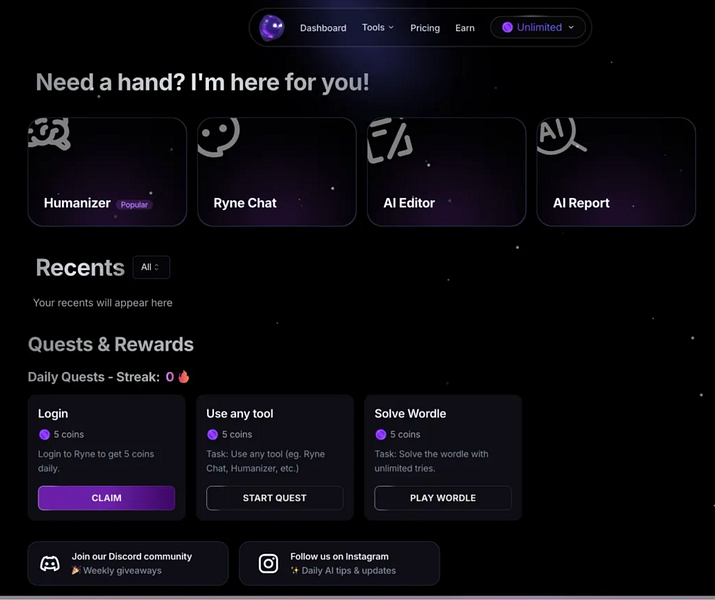
After drafting the text, they humanize with the help of AI. Here is where most students fail completely. People create AI content and submit it right off the bat, not realizing that the raw AI text reads like it was written by a machine because it was written by a machine. The experts convert AI to human vernacular before submitting it. They use tools especially designed for converting AI language to human language while keeping the meaning and flow intact.
How Detection Software Actually Works (And How to Beat It)
Let’s talk about something we’re all thinking. You’re Concerned About AI Detection. You ought to be. However, it is important to be perfectly aware of what you are dealing with so that you can approach it intelligently rather than being paranoid.
Turnitin offers an AI detection software which uses pattern analysis to identify whether the content is machine-written. It seeks for statistical consistency, predictable sentence patterns, predictable lack of stylistic variety, and the absence of genuine human idiosyncrasies and errors in the writing. The greater the resemblance of your text to a model generated by probability, the greater your AI score.
Here's what detection software cannot do: it cannot detect ideas. Flag conceptual frameworks may not It cannot recognize research synthesis. It analyzes only the surface level linguistic. It makes a whole lot of difference.
The winning strategy is simple. Use the AI for the intellectual heavy-lifting. Let it do research, outline your piece, develop ideas and help structure your arguments. Then write it yourself. Or humanize the output before submitting. This strategy gets past detection every time, because the final product actually represents your voice and writing style.
This is exactly why AI humanizer tools exist. They take AI text and convert it to human language by introducing natural variations, stylistic inconsistencies, and authentic human writing patterns. The result is content that maintains the intellectual quality of AI assistance while reading as genuinely human.
Want to know if humanizers actually work against detection? Research shows that properly humanized text consistently bypasses AI detection because it genuinely becomes human-like in its patterns and structure. You can explore whether humanize AI works on Turnitin and how Turnitin can detect humanize AI in specific conditions.
Step-by-Step: Using AI to Improve Every Stage of Academic Writing
Academic writing has distinct stages, and AI helps differently at each one. Here's the systematic approach that produces consistently excellent results.
Stage 1: Research and Idea Development
Start by using your AI writing helper to explore your topic comprehensively. Don't ask it to write anything yet. Ask it to explain key concepts, identify major debates in your field, suggest relevant theoretical frameworks, and point you toward important sources.
The goal here is understanding, not content generation. You're building the intellectual foundation that makes strong academic writing possible. Students who skip this stage produce surface-level papers that lack depth, regardless of how polished the writing appears.
Use AI to ask questions like: "What are the main scholarly debates around [your topic]?" or "What theoretical frameworks are commonly applied to [your research area]?" The responses give you a map of the intellectual landscape you need to navigate.
Stage 2: Outlining and Structure
Once you understand your topic thoroughly, use AI to help structure your argument. Academic papers follow specific organizational patterns depending on discipline and assignment type. An AI writing helper knows these patterns intimately and can suggest structures appropriate for your specific task.
Feed your AI tool your thesis statement and key arguments, then ask it to suggest an organizational structure. Don't accept its first suggestion blindly—evaluate whether the structure actually serves your argument. Often the AI's initial structure is generic. Push back, explain what's unique about your argument, and ask for revised suggestions.
The outline stage is where AI assistance provides the highest return on investment. A strong outline makes writing dramatically easier, while a weak outline guarantees a messy final product regardless of how much time you spend on prose.
Stage 3: Drafting
This is where most students make their biggest mistake. They ask AI to write their draft and submit the result. That approach fails for two reasons: it triggers detection software, and it produces generic content that lacks your unique perspective and voice.
Instead, use AI as a drafting partner. Write paragraphs yourself, then ask AI for feedback. Where is the argument weak? What evidence would strengthen this point? How could this transition be smoother? The AI responds with specific, actionable suggestions you implement yourself.
Alternatively, have AI generate a rough draft as a starting point, then rewrite it substantially in your own voice. This approach is faster but requires discipline—you must genuinely rewrite, not just make surface edits. The final product needs to reflect your thinking and your language patterns.
Stage 4: Revision and Editing
AI excels at revision tasks because it spots problems human writers miss after hours of staring at the same text. Use your AI writing helper to check for logical consistency, identify unclear passages, flag unsupported claims, and suggest improvements to sentence structure and word choice.
The thematic analysis from the POLITEHNICA Bucharest research revealed that students found AI most valuable for "timesaving" (42 responses), "optimization of information comprehension" (24 responses), and "information structuring" (16 responses). These revision-stage benefits far exceed what students gain from using AI for initial drafting.
Stage 5: Humanizing and Polishing
The final stage is critical: humanizing the text to ensure it reads as authentically yours. Even if you wrote most of the content yourself, AI assistance often introduces patterns that detection software recognizes. A dedicated AI humanizer resolves this problem.
Ryne Ai Humanizer offers a humanizer that transforms AI text into genuinely human-sounding content. The process works by analyzing your text for machine-like patterns and systematically replacing them with variations that match natural human writing. The result passes AI detection while maintaining the quality and clarity of your work.
This isn't cheating—it's smart editing. Every professional writer uses tools to improve their work. The only difference is the sophistication of the tools available today.
The Specific AI Tools That Actually Work for Academic Writing
Not all AI writing helpers are created equal. Some excel at research tasks but produce wooden prose. Others write fluidly but lack academic rigor. The best approach combines multiple tools, each used for its specific strength.
For Research and Ideation: General-purpose AI assistants like Claude or ChatGPT work well for exploring topics and generating ideas. They have broad knowledge bases that support initial research across disciplines.
For Writing Assistance: Dedicated AI writing tools designed for academic contexts produce better results than general chatbots. In addition, some students use multimedia tools such as voiceover AI to convert written explanations into audio summaries, which can help review complex academic material more effectively. They understand citation requirements, disciplinary conventions, and academic tone.
For Humanizing AI Text: You need a specialized AI humanizer—general AI tools cannot effectively transform machine patterns into human ones because they generate the same patterns they'd be trying to remove. A purpose-built tool like Ryne Ai Humanizer specifically addresses this challenge, converting AI to human language patterns that pass detection.
For Grammar and Style: Tools like Grammarly catch surface-level errors, but academic writing requires more than correct grammar. The best tools also evaluate clarity, concision, and consistency with academic conventions.
For Undetectable Content: If your priority is creating plagiarism-free AI writing that bypasses detection, you need AI writing tools that pass AI detection. These tools are specifically engineered to produce content that reads as human from the start.
The research shows students prefer this multi-tool approach. According to the Digital Education Council's global survey cited by Campbell University's Academic Technology Services, students primarily use ChatGPT (most popular), followed by Grammarly and Microsoft Copilot. Each tool serves a different purpose in their writing workflow.
Common Mistakes That Get Students Caught or Produce Bad Work
Understanding what not to do is as valuable as knowing what to do. These are the mistakes that consistently produce detection flags, poor grades, or both.
Mistake 1: Submitting Raw AI Output
AI writes in recognizable patterns. Even if detection software didn't exist, professors can often identify AI-generated content because it lacks the idiosyncrasies that characterize individual human voices. Always humanize the text before submission, regardless of whether you think detection is a concern.
Mistake 2: Using AI Without Understanding the Topic
If you don't understand what your paper argues, no amount of AI assistance will help. AI amplifies your thinking—if there's nothing to amplify, you get empty verbiage that fails under any scrutiny. Do the intellectual work first, then use AI to express and refine your ideas.
Mistake 3: Trusting AI Accuracy Without Verification
The POLITEHNICA research found that 48.2% of students were concerned about receiving incorrect or imprecise answers from AI. This concern is legitimate. AI confidently states false information. Every factual claim generated by AI requires verification against credible sources. Never cite something solely because an AI told you it exists.
Mistake 4: Ignoring Disciplinary Conventions
Different academic fields have different writing expectations. What works for a sociology paper fails in a chemistry lab report. General AI tools don't automatically adjust for these differences. You need to specify your discipline and assignment type explicitly, or the AI will produce generically academic content that misses field-specific requirements.
Mistake 5: Skipping the Outline Stage
Students rush to drafting because it feels productive. It isn't. A messy draft from a poor outline requires more time to fix than writing slowly from a solid structure. Use AI extensively at the outlining stage—it saves time overall while producing better final results.
Advanced Strategies for Maximum Academic Impact
Once you've mastered the basics, these advanced approaches separate good papers from exceptional ones.
Layer Multiple Drafts with Different AI Prompts
Don't settle for one AI-assisted revision. Each pass with different prompts reveals different issues. First pass: check logical structure. Second pass: evaluate evidence quality. Third pass: assess clarity and readability. Each layer improves the work incrementally.
Use AI to Generate Counterarguments
Strong academic writing anticipates and addresses objections. Ask AI to argue against your thesis, then use those counterarguments to strengthen your paper. This technique produces more nuanced, sophisticated arguments that demonstrate critical thinking.
Synthesize Sources With AI Assistance
Literature reviews require synthesizing multiple sources into coherent narratives. AI excels at identifying connections between sources and suggesting organizational frameworks for synthesis. Feed it your key sources and ask for potential synthesis strategies.
Practice Academic Tone With AI Feedback
If academic writing style doesn't come naturally to you, use AI as a tone coach. Write paragraphs in your natural voice, then ask AI to identify where the tone deviates from academic conventions and suggest adjustments. Over time, you internalize these patterns.
Create Custom Instructions for Consistent Output
Most AI tools allow you to set custom instructions that apply to all conversations. Configure your AI writing helper with your discipline, writing level, and specific preferences. This produces more relevant responses without repeating context in every prompt.
The Ethics Question: Where's the Line?
Let's be direct about ethics because dancing around this question helps no one.
Using AI to learn, research, outline, get feedback, and improve your writing is not cheating. It's intelligent use of available tools. The same logic applies to calculators in math, spell checkers in writing, and citation managers in research.
Using AI to generate content you submit as entirely your own work without substantial transformation is academically dishonest. The line is contribution: did you contribute intellectually to the final product, or did you just copy machine output?
The 82.4% of students in the POLITEHNICA study who reported that AI improved their academic performance weren't cheating—they were learning more efficiently. The 2.4% who worried AI could harm their performance recognized that mindless copy-paste approaches backfire.
Your job is staying on the right side of this line while maximizing legitimate benefits. Use AI to think better, not to avoid thinking. Transform AI output into genuinely your own work through humanizing and substantial revision. Cite AI assistance when your institution requires disclosure.
Why Humanizing AI Text Is Non-Negotiable
Let's return to the critical step most students skip: humanizing the text after AI assistance.
Even when you write primarily yourself with AI feedback, your writing absorbs machine patterns through the interaction. Detection software catches these subtle influences. A dedicated AI humanizer removes them.
The process isn't about hiding AI use. It's about producing genuinely human-sounding text that accurately represents your intellectual contribution. When you humanize the text properly, the final product reflects your ideas in your voice—AI just helped you get there faster and better.
Ryne.ai's humanizer specifically addresses academic use cases. It understands the need to maintain scholarly tone while removing machine patterns. The result is undetectable AI text that preserves your hard work while eliminating detection risk.
You can also find free AI humanizer options to get started, though premium tools typically produce more sophisticated humanization for high-stakes academic work.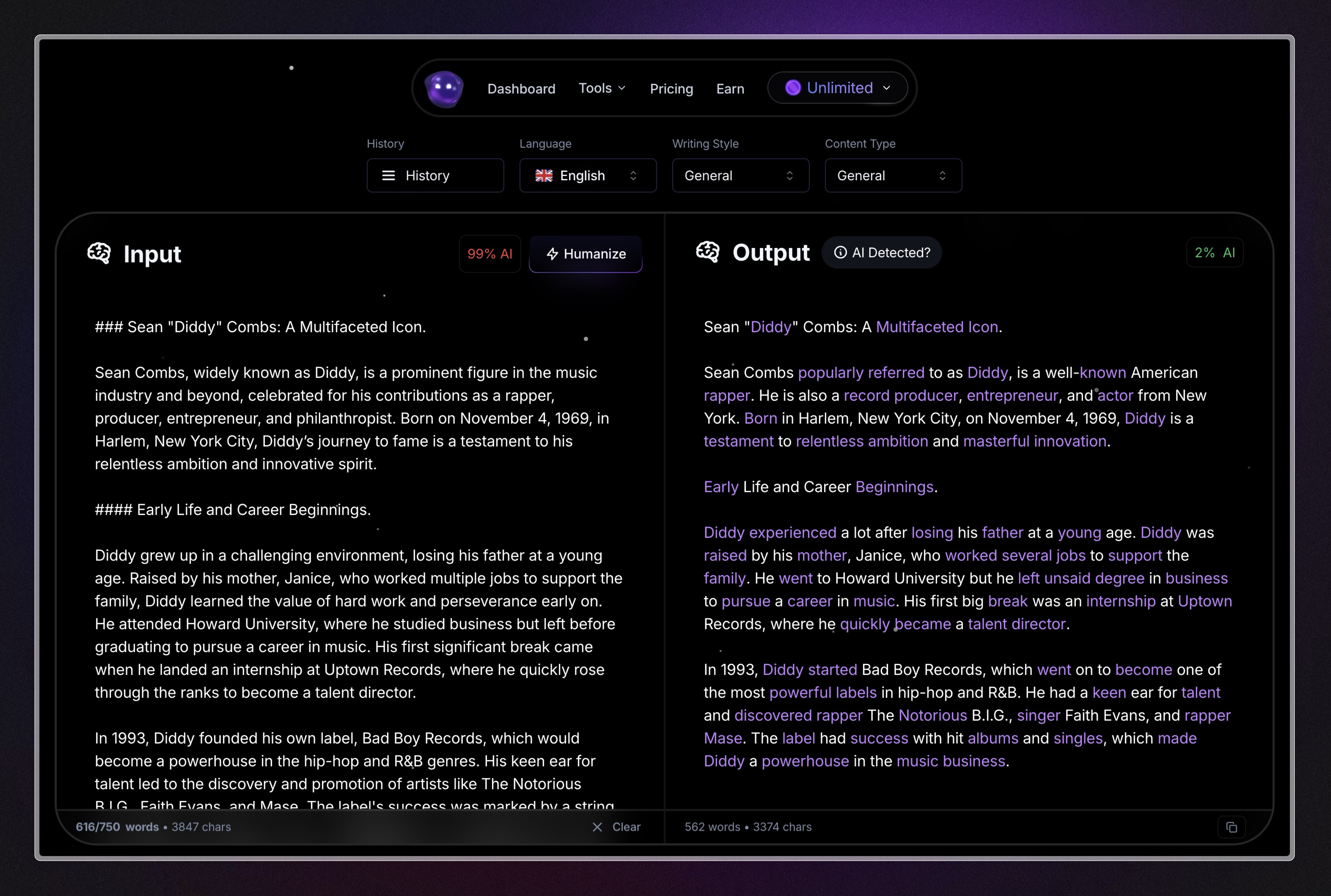
Building Long-Term Writing Skills With AI Assistance
The best AI writing helper doesn't make you dependent—it makes you better. Used correctly, AI assistance accelerates skill development rather than replacing it.
The research confirms this. Students in the POLITEHNICA study reported that AI helped with "optimization of information comprehension"—meaning they actually understood material better through AI interaction, not worse. The 83.5% who found AI improved their learning efficiency weren't taking shortcuts; they were learning more effectively.
Approach AI as a tutor rather than a ghostwriter. Every time AI suggests an improvement, understand why that improvement works. Every time AI identifies a weakness, learn to spot similar weaknesses yourself. Every time AI structures an argument, internalize the structural logic.
Over months of this approach, you'll notice something remarkable: you need AI less for the same results. Your unassisted writing improves because you've absorbed patterns and principles through AI-assisted practice. This is the legitimate, sustainable benefit of AI writing helpers—accelerated skill development that produces permanent improvement.
Frequently Asked Questions About AI and Academic Writing
Can AI writing helpers really improve my academic writing?
Yes, definitively. Research shows 82.4% of students believe AI contributes to enhancing their academic performance. AI improves writing by providing feedback, suggesting structures, identifying weaknesses, and exposing you to effective patterns. The key is using AI as a learning tool rather than a replacement for your own thinking.
Will my professors detect AI-written content?
If you submit raw AI output, probably yes. Detection software and professor intuition both catch unprocessed AI content. However, properly humanized text that incorporates AI assistance into your own writing passes both detection and human review. The solution is transforming AI output, not avoiding AI entirely.
What's the difference between an AI humanizer and regular AI writing tools?
Regular AI writing tools generate content with machine-like patterns. AI humanizers specifically transform text to remove these patterns, converting AI language to human language that sounds natural and passes detection. They serve different purposes in an effective writing workflow.
Is using AI for academic writing considered cheating?
It depends on how you use it. Using AI for research, feedback, outlining, and learning is legitimate. Submitting AI-generated content as your own without transformation crosses ethical lines. Check your institution's specific policies, but the principle remains: your intellectual contribution must be genuine.
How do I make AI-generated content undetectable?
Use a dedicated AI humanizer to transform AI text into human-sounding content. Beyond that, substantially rewrite any AI-generated material in your own voice, add personal insights and examples, and ensure the final product reflects your genuine understanding. Multiple revision passes with different focuses also help.

Start Improving Your Academic Writing Today
You now have everything you need to use AI writing helpers effectively. Not the sanitized advice that plays it safe. The real strategies that produce excellent academic work while protecting you from detection.
The students excelling around you aren't smarter. They're using better systems. An AI writing helper paired with proper humanizing techniques is the competitive advantage that transforms academic writing from struggle to strength.
Start using Ryne Ai free and see what's actually possible when you have the right tools working for you. Your next paper can be the turning point—the assignment where everything clicks and academic writing stops being a source of stress.
The old way of struggling alone with blank documents is finished. The smart way uses every available tool to produce better work faster. Which approach sounds like a better use of your time?


AI Writing Helper: Improve Your Writing Instantly
You're staring at a blank page, and the cursor keeps blinking. Hours pass. The essay deadline approaches. Your brain freezes. Sound familiar? This is the writing struggle millions face daily—students battling essays at 2 AM, professionals wrestling with reports, and content creators hitting walls they didn't see coming.

Turnitin-Proof AI Writing Software: How to Humanize AI Text & Pass Detection
Here's the truth nobody wants to admit: Turnitin's AI detection system is fundamentally flawed, and students worldwide are paying the price. The system designed to protect academic integrity is now destroying it by falsely accusing innocent students of cheating. If you've ever stared at a "suspicious AI content" flag on work you genuinely wrote yourself, you already understand the problem.