


Top AI Writing Assistants for Students (2026)

Writing papers in college feels like running a marathon you didn't train for. You're juggling deadlines, drowning in research, and expected to produce university-level work while still figuring out how to do laundry. The system sets you up to fail, then punishes you when you can't keep up.
Here's the thing everyone's thinking but won't say out loud: 92% of undergraduate students already use AI tools in their studies. That's not a prediction. That's a 2025 survey of over 1,000 UK students. The question isn't whether you'll use an AI writing assistant—it's whether you'll use a good one.
This guide breaks down the best AI writing assistant for students. No fluff. No corporate buzzwords. Just the tools that actually work for academic writing, along with how to use them without crossing ethical lines or producing robotic AI text that gets flagged instantly.
What is an AI Writing Assistant for Students?
An AI writing assistant is software that uses artificial intelligence to help you write, edit, research, and organize academic content. These aren't the clunky grammar checkers your parents used. Modern AI writing tools run on sophisticated language models that understand context, structure, and style.
Best AI Writing Assistants For Students – for students, the best AI writing assistants can generate thesis statements, organize research notes, suggest better sentence structures, and clarify your arguments. Some help even more, letting you think of topics, cite sources properly, or turn ramblings into paragraphs.
Consider these apps as your personal writing trainer who is available at 3 AM with your paper due by 8 AM. A tool that promises to write your paper is a scammer. Don’t fall for it. Rather than speeding up the writing process, they enhance elements that typically slow writers down. This includes starting, organizing their work, and refining rough drafts.
The main difference between general AI tools and student writing assistants is their intended purpose. A regular chatbot may produce a very generic essay. An ideal academic writing assistant knows about citing, academic tones, structure of arguments, and the student writing problem.
Why Students Actually Need AI Writing Help
Let's address the elephant in the room. Some professors act like using AI is the same as cheating. That's like saying using a calculator in engineering class is cheating. The world has changed. The Digital Education Council's 2024 survey found that 86% of students globally use AI in their studies, with 54% using it weekly.
Here's what these tools actually solve:
The Time Problem
A majority of students carry credit weight of 15-18 hours, work part-time and have personal responsibilities to manage. When three papers are due during the same week, things break. AI writing tools minimize the research and drafting phases, giving you more time to actually learn and revise.
According to the HEPI/Kortext survey, 51% of students say the primary reason they use AI is to save time. That's not laziness—that's survival.
The Starting Problem
Staring at a blank page can be like torture. You’re shopping for your ideas and you know what you want to say, but getting the first sentence out is the hardest part. AI writing assistants are great at generating starting points, outlines, and rough drafts, which you can then reshape into your own voice.
The Quality Gap
Staring at a blank page can be like torture. You’re shopping for your ideas and you know what you want to say, but getting the first sentence out is the hardest part. AI writing assistants are great at generating starting points, outlines, and rough drafts, which you can then reshape into your own voice.
The Feedback Gap
Your professor isn't available 24/7. The writing centre is neither. Writing assistant using AI will give you instant feedback during the late-night writing session when you do not have any human help.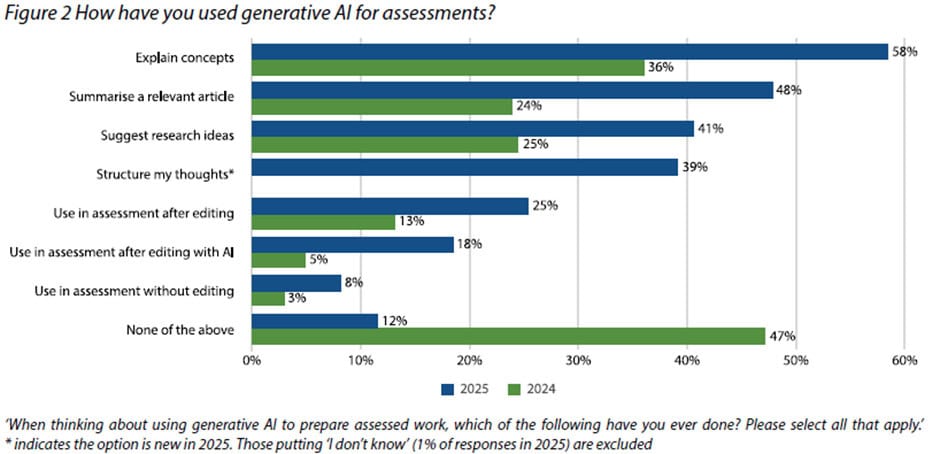
Top AI Writing Assistants for Students (2026)
In the course of testing dozens of platforms, the tools that proved effective for academic writing were those listed below. This isn’t a list of every AI writing tool there is. Rather, it’s just a selection of tools that work best for students.
1. Ryne AI – Best All-in-One Academic Writing Platform
Ryne AI Humanizer stands apart as the most student-focused AI writing platform available. While most tools try to serve everyone from marketers to novelists, Ryne built specifically for academic writing challenges.
What Makes It Different:
Ryne gives you not just text generation. It actually helps you humanize AI content so that you sound like you rather than a robot. The platform has an AI humanizer that can take all your AI content and convert it into natural-sounding content that matches your voice. This is because professors are getting better at recognizing generic AI output, while AI detection tools are becoming ubiquitous at universities.
The platform also includes:
- Essay structuring and outlining tools
- Research organization features
- Citation assistance for major formats (APA, MLA, Chicago)
- Grammar and style checking tuned for academic writing
- An AI text editor that suggests improvements without changing your meaning
Best For: Students who need comprehensive essay help, from brainstorming through final revision. Particularly strong for humanizing the text generated by other AI tools.
Pricing: Free trial available. Premium plans offer expanded features for heavy users.
Why Students Choose It: Ryne understands the student workflow. Generate a draft, humanize it into your voice, check for errors, format citations—all in one place. No jumping between six different tools.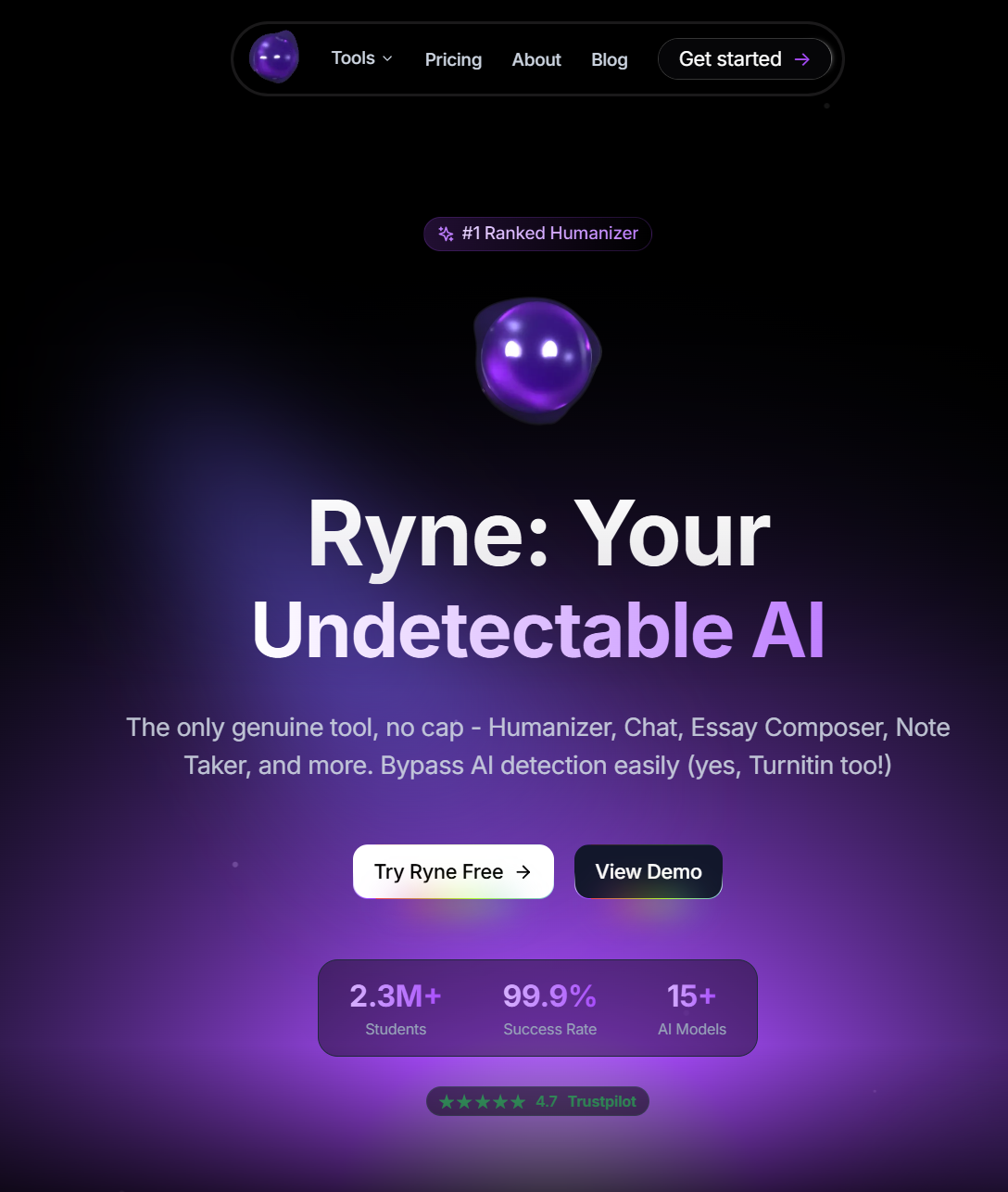
2. Grammarly – Best for Grammar and Clarity
Grammarly has been the go-to grammar tool for years, and its AI features have made it much better. According to the BBC’s report, the tool assesses the quality of your writing by analyzing “spelling, grammar, punctuation, style”, and more.
Strengths:
- Catches mistakes other tools miss
- Browser extension works everywhere you write
- Tone detection helps match academic expectations
- Free version covers basic needs
Limitations:
- Premium pricing can be steep for students on tight budgets
- Less helpful for generating new content
- Generic suggestions sometimes miss academic context
Best For: Students who write competently but need a safety net for errors and clarity improvements.
Pricing: Free basic plan. Premium starts around $12/month with student discounts often available.
3. QuillBot – Best for Paraphrasing and Rewording
QuillBot is a paraphrasing tool that rewrites existing content without changing meaning. Rephrasing can help when you are weaving together research sources, avoiding repetition, or trying to express something complicated.
Strengths:
- Seven paraphrasing modes (Standard, Fluency, Formal, etc.)
- Free version available without signup
- Includes grammar checker and summarizer
- Citation generator for common formats
Limitations:
- Paraphrased output sometimes needs additional editing
- Heavy reliance could reduce your own writing development
- Not designed for generating original content
Best For: Students working with lots of source material who need help integrating and rewording without plagiarizing.
Pricing: Free tier with limits. Premium around $8-10/month.
4. Jasper – Best for Long-Form Content
Jasper started as a marketing copywriting tool but has evolved into a robust AI writing platform capable of producing long-form content. For students writing lengthy research papers or dissertations, Jasper's ability to maintain consistency across thousands of words stands out.
Strengths:
- Excellent at maintaining voice and tone across long documents
- 50+ templates for different content types
- Brand Voice feature learns your writing style
- Integrates with Grammarly and SEO tools
Limitations:
- Higher price point ($39/month+)
- Better suited for marketing than pure academic work
- Overkill for shorter assignments
Best For: Graduate students or undergrads tackling major research projects requiring sustained, consistent writing.
Pricing: Starting at $39/month. No free tier, but trial available.
5. Writesonic – Best Budget Option
Writesonic delivers solid AI writing at a lower price than competitors. The platform includes article generation, paraphrasing, and summarization—all basics student writers need.
Strengths:
- Affordable entry point
- Multiple language support
- Article summarizer works well for research
- Free tier available
Limitations:
- Output quality below top-tier options
- Sometimes produces repetitive phrasing
- Less sophisticated academic understanding
Best For: Students on tight budgets who need basic AI writing assistance without premium costs.
Pricing: Free plan with limits. Paid plans from $12-16/month.
6. Copy.ai – Best for Quick Drafts
Copy.ai employs a chat interface which makes creating quick drafts feel conversational. Request an introduction, and it provides choices. Ask for bullet points and get structure outlines. Students who have a rough idea of what they want but don’t know how to do it can use an iterative approach effectively.
Strengths:
- Conversational interface reduces friction
- Iterates based on feedback
- 40+ templates
- Solid free tier (2,000 words/month)
Limitations:
- Clichéd phrasing crops up frequently
- Better for brainstorming than polished output
- Not specifically designed for academic use
Best For: Students who need a brainstorming partner to generate rough drafts they'll heavily revise.
Pricing: Free plan available. Paid plans from $36/month.
7. Sudowrite – Best for Creative Writing Students
If you're in a creative writing program, most AI tools will disappoint you. Sudowrite is the exception. Built specifically for fiction and creative writing, it helps with character development, plot suggestions, sensory descriptions, and overcoming writer's block.
Strengths:
- Uncensored output for mature themes
- Understands narrative structure
- Tools for describing senses, emotions, settings
- Feedback feature suggests improvements
Limitations:
- Useless for research papers or analytical essays
- Subscription-based with credits
- Learning curve for features
Best For: Creative writing majors, MFA students, and anyone writing fiction or narrative nonfiction.
Pricing: From $10/month (Hobby plan) to $22/month (Professional).
8. Rytr – Best Value for Basic Writing
Rytr offers straightforward AI writing assistance at one of the lowest price points available. With 40+ templates and support for over 30 languages, it covers basic student needs without breaking the bank.
Strengths:
- Extremely affordable ($9/month)
- 30+ language support
- Plagiarism checking included
- Custom use case creation
Limitations:
- Quality inconsistent on complex topics
- Limited control over output style
- Word count limits on cheaper plans
Best For: International students or those needing multilingual support on a tight budget.
Pricing: Free tier available. Premium from $9/month.
AI Writing Assistant Comparison Table
| Tool | Best For | Free Plan | Starting Price | Academic Focus |
|---|---|---|---|---|
| Ryne.ai | Complete academic writing + humanizing AI text | ✓ | Free trial available | ★★★★★ |
| Grammarly | Grammar, clarity, tone | ✓ | $12/month | ★★★★☆ |
| QuillBot | Paraphrasing, summarizing | ✓ | $8/month | ★★★★☆ |
| Jasper | Long-form content | ✗ | $39/month | ★★★☆☆ |
| Writesonic | Budget AI writing | ✓ | $12/month | ★★★☆☆ |
| Copy.ai | Quick drafts, brainstorming | ✓ | $36/month | ★★★☆☆ |
| Sudowrite | Creative writing | Trial | $10/month | ★★☆☆☆ (creative only) |
| Rytr | Budget basics | ✓ | $9/month | ★★★☆☆ |
How to Choose the Right AI Writing Assistant
Not all AI homework writing tool fit all students. Your choice depends on what you actually need. Here's how to think through it:
What's Your Primary Challenge?
If you struggle with grammar and clarity, Grammarly or a similar AI writing helper solves that directly. If starting from blank pages paralyzes you, tools like Copy.ai or Writesonic help generate starting points. If you need comprehensive essay help from outline to final draft, Ryne.ai covers the entire workflow.
How Much Do You Write?
Students who have to produce one paper a month will have different needs than those engaged in weekly writing. Unlimited plans are beneficial for writers who write in bulk. Writers use free tier refers to that.
What's Your Budget?
Be credible here. If you had to choose between a tool that costs $40 a month and groceries, that tool doesn’t make sense. Begin with free alternatives. Only upgrade when constraints actually hinder you.
Do You Need to Humanize AI Output?
This matters more than people realize. Professors are increasingly savvy about AI-generated text. If your writing suddenly sounds nothing like previous work, questions follow. Tools like Ryne AI Humanizer that help you convert AI to human-sounding text and humanize the text to match your voice prevent this problem.
What Type of Writing?
Research papers, creative writing, lab reports, and reflection journals all demand different approaches. Match the tool to your actual assignments.
Start Your Trial →Free AI Humanizer
How to Use AI Writing Assistants Ethically
Here's where things get serious. Using AI writing tools wrong can get you expelled. Using them right makes you a better writer. The difference comes down to approach.
The Right Way:
- Use AI to generate outlines and brainstorm ideas, then write content yourself
- Let AI suggest revisions to your existing drafts
- Use paraphrasing tools to help integrate research sources (with proper citations)
- Check your work with grammar tools before submission
- Humanize any AI-generated content to match your authentic voice
The Wrong Way:
- Submit AI-generated content as your original work
- Use AI to write entire papers you claim as your own
- Bypass plagiarism or AI detection without transforming the content
- Replace the learning process with output generation
According to the HEPI survey, 53% of students worry about being accused of cheating when using AI. That fear is valid—but the solution isn't avoidance. It's ethical use.
These days, most universities have AI policies. Check yours. Know what’s allowed and what isn’t. Asking your professor is always better. Those who have been following the trends in education know that AI assistance is not the same as AI replacement.
If you couldn't explain, defend or justify what you've submitted, in a conversation, you probably have crossed an ethical line. Your thinking should be aided by the AI.
The AI Detection Problem (And How to Handle It)
AI detection tool similar to Turnitin increasingly used by colleges. These tools study writing characteristics to determine odds of AI generation.
Don't let the ease of the process fool you! They show false positives on human work and miss some AI writing. But they are getting better and they change the game.
Detection is important for students
Being flagged creates issues. You will end up defending work you honestly wrote. Doubts remain even after exoneration.
The Smart Approach:
Instead of using tricks to dodge AI detection or plagiarism checkers, focus on writing your own ideas. Tools that help you humanize AI text will come in very handy here. We’re not looking to fool detection, but rather get AI to assist like a human.
When you use AI to generate ideas or rough content, take the time to:
- Rewrite sections in your voice
- Add personal examples and perspectives
- Integrate your own research and citations
- Apply your unique analytical framework
- Use tools like Ryne.ai's AI humanizer to ensure natural, undetectable output
The result is writing that's genuinely yours—with AI serving as a tool in your process, not a substitute for your effort. That's undetectable because it's authentic, not because you gamed the system.
Improving Your Academic Writing With AI Tools
The best use of AI writing assistants isn't producing finished papers—it's becoming a better writer. Here's how to leverage these tools for genuine skill development:
Use AI to Learn Structure
When an AI creates an outline or organizes an argument, study the structure. What made it choose that point first? In what manner does it change? Learn from these options to improve your organization.
Analyze AI Suggestions
Never accept changes suggested by a grammar tool just like that. Inquire concerning. What regulation applies? What advantages does the substitute have? This makes correction active learning instead of passive.
Compare Your Drafts to AI Revisions
Compose a paragraph on your own. Next have AI rewrite it. Examine the variants. Where has it improved? Where did it fail to meet your expectations? This cycle makes improvements happen faster.
Practice Humanizing AI Output
Take AI-generated content and rewrite it in your voice. This forces you to engage with word choice, sentence rhythm, and personal style—core writing skills that transfer everywhere.
Check out our guide on how to improve academic writing with AI tools for detailed strategies beyond what we've covered here.
Common Mistakes Students Make With AI Writing Tools
Avoid these pitfalls that trip up even smart students:
Mistake #1: Submitting Unedited AI Output
AI text often contains subtle errors, inconsistencies, or that unmistakable robotic quality. Raw AI output looks like raw AI output. Always revise, humanize, and polish.
Mistake #2: Over-Relying on One Tool
Different tools excel at different tasks. Using only Grammarly won't help you brainstorm. Using only Copy.ai won't catch grammar errors. Build a toolkit matching your needs.
Mistake #3: Ignoring Citation Requirements
AI can suggest sources and format citations, but you remain responsible for accuracy. Verify every citation. AI hallucination is real—tools sometimes invent sources that don't exist.
Mistake #4: Skipping the Learning
If AI writes everything and you learn nothing, you're wasting tuition dollars. Use AI as a learning accelerator, not a learning replacement.
Mistake #5: Not Understanding Your University's Policy
Policies vary wildly. Some professors embrace AI tools. Others ban them entirely. Know the rules before using any tool.
Frequently Asked Questions
What is the best AI writing assistant for students?
Ryne AI Humanizer offers the most comprehensive solution specifically designed for student needs, including essay help, research organization, citation formatting, and tools to humanize AI text into natural-sounding writing. For students focused solely on grammar, Grammarly remains the standard.
Can AI writing assistants help improve my grades?
AI writing assistants may not help you directly, but they can help improve your grades indirectly. They help catch errors, improve clarity, and strengthen arguments. Importantly, it also helps you meet requirements of the assignment. Nevertheless, at the end of the day, it is your ideas, quality of research and your honest engagement with the subject matter that finally decides the grades. AI helps you articulate your thoughts; it doesn't think on your behalf.
Are AI writing tools considered cheating?
Using AI writing tools isn’t cheating per se, but it can be if used incorrectly or not aligned with the school’s policy. Using AI to brainstorm, check my grammar and for revision is okay. At most institutions, submitting AI-generated content as your original work is an ethical violation. In all circumstance check your university policy.
How do I avoid AI detection on my papers?
It is better to create something new that is not a copy. Integrate AI into your workflow, but remember to be a human. Rewrite the output in your voice, incorporate your thoughts, and make sure the final output is reflective of your own ideas. Assistance with AI content that help to convert AI Text to human-sounding content that feels like you is Ryne.ai.
Is there a free AI writing assistant for students?
Several AI writing assistants offer free tiers suitable for students. Try Ryne.ai for free. The free version of Grammarly covers basic grammar only. QuillBot’s free paraphrasing tool comes with limits. You can get 2000 free words in a month through Copy.ai. Rytr has a free version available. For most learners, it is logical to start off with the free ones before moving on to the upgraded version.
What features should students look for in an AI writing tool?
The students must focus on academic specific features like citation formatting and essay structure, the quality of the output, the ability to humanize the text according to the personal voice of students, grammar and clarity check, easy to use and cheap. A tool requiring switching between different platforms creates friction. Integration with your existing workflow counts.
Conclusion: Your AI Writing Toolkit
The best AI writing assistant for students isn't the most expensive or the most feature-packed. It's the one that solves your specific challenges without replacing the learning you're paying for.
For comprehensive academic writing support—from initial brainstorming through polished final drafts Ryne AI Humanizer offers a customized platform that enhances your writing ability while maintaining your authentic voice. The capacity to modify AI text and convert AI into human-sounding text eliminates detection worries which keep a lot of students up at night.
Try the advanced filters. Find what truly blocks your writing. Afterward, invest in tools that will help solve that problem.
The system wants you to create more than a normal student could ever achieve. AI content creators put the odds back in your favor. Employ them astutely, efficiently and ethically and your academic writing will transform.


Top best 11 Ai writing platform | review
The content game changed. Writers who spent hours crafting a single blog post now watch AI writing platforms produce comparable work in minutes. The difference between those winning at content and those falling behind comes down to one decision: which AI writing platform they chose.

AI Writing Helper: Improve Your Writing Instantly
You're staring at a blank page, and the cursor keeps blinking. Hours pass. The essay deadline approaches. Your brain freezes. Sound familiar? This is the writing struggle millions face daily—students battling essays at 2 AM, professionals wrestling with reports, and content creators hitting walls they didn't see coming.