


Sapling AI Detector Review 2026: How Hard Is It to Bypass?

In 2026, talk about spotting machine-made text keeps growing - Sapling AI Detector shows up often in those conversations. While bots write blogs, ads, school papers, and online descriptions, knowing what’s human vs computer matters more now.
Editors, educators, SEO workers turn to tools such as Sapling AI Detector, GPTZero, Originality AI, and Copyleaks when they check if words were made by people.
Yet a common curiosity lingers: can you bypass Sapling AI without getting caught? This piece looks at how well it works, where it falls short, yet also checks whether tricks like softening robot-sounding phrases, using an AI text humanizer, or swapping out sentences make any real difference to bypass AI detection.

Understanding Sapling AI Detector
A fresh tool called Sapling AI Detector checks if text comes from a person or an artificial mind such as those behind GPT engines. Professionals often turn to it when originality and clarity carry weight in their work.
By studying how sentences flow, word choices repeat, and language holds together, it guesses how likely it is that machines wrote the words.
Rather than fix punctuation or spelling, this system hunts for signs of robotic rhythm in phrasing. Some stack it beside rivals - GPTZero, Originality AI, even Copyleaks - to see how well it spots machine-made writing across fields and tones.
How Sapling AI Detector Works
Out of step with human quirks, some writing flows too smoothly - Sapling spots that. A steady beat in sentences sometimes hints at code behind the words instead of thought.
Patterns repeat where variation should live, giving subtle signs to analysis tools.
Scoring happens quietly after checking how expected each phrase feels in sequence. Too clean, too even? That’s when flags go up under close digital inspection. Patterns that repeat too often raise red flags for automated checks.
Yet writing with shifts in rhythm, raw feelings, or uneven flow slips under the radar easier, seeming less like code and more like people. That is why many users try to humanize AI text before submitting it to an AI content detector.
Sapling AI Detector Key Features
What makes Sapling stand out isn’t only spotting AI-written text. Instead, it looks at sentences to guess if a machine probably wrote them. Beyond that, errors in spelling or structure get flagged along the way through its built-in grammar and spell checker.
Because clarity matters, the tool measures how easily someone can follow the readability and flow of the content. Smoothness comes through when ideas connect without stumbling. Yet every suggestion aims to lift the words, not reshape who you are.
What stands out about Sapling is how it serves writers and those who revise their work. Still, the core aim stays fixed on spotting AI generated content while helping people write in a way that feels more natural.
Testing Sapling AI Detector
Most times, fake writing gets flagged fast by Sapling's system. If nobody changes the machine-made words, the tool almost always spots them. Real people typing their own thoughts tend to fly under the radar with low flags.
A twist shows up when someone tweaks robot-written parts by hand - suddenly it’s harder to tell what’s real. When things get tricky, Sapling might have a hard time deciding how to label the text.
That's when helpers such as AI paraphrasing tools or software that makes machine-written words feel more human start to matter - because they reshape artificial phrasing so it flows like something a person would say.
Can You Bypass Sapling AI?
Most people searching online in 2026 wonder if they can bypass Sapling AI. Yes - it’s possible, though definitely not simple. Rewriting a little here or swapping a few words won’t cut it. That kind of change rarely fools the software.
It looks past small edits, spotting how sentences are built underneath. Structure matters more than wording. Most people turn to automatic software, yet it rarely works when facing strong detection methods.
For actual success to bypass Sapling AI, writing must appear like something a person would create - shifting rhythm between lines, carrying subtle feelings, diving into ideas just deep enough to feel genuine.
Simple Rewriting Often Misses the Point
Most basic rewrites fall short since detection tools look beyond word swaps. They check how sentences are built, whether phrasing feels too smooth or expected. Even swapping terms with similar ones won’t help much if the skeleton stays robotic.
That predictable rhythm gives away artificial origins fast. Tools like Sapling spot those hidden fingerprints without needing obvious clues. Too much tweaking often backfires, leaving words feeling stiff or awkward.
That’s why some machine-made texts stay marked as fake, no matter how many times they’re reworked or lightly adjusted by people.
Better Ways to Avoid Detection
Most people find that swapping words around isn’t enough to bypass Sapling AI. Tweaking rhythm, mood, or pacing during rewriting often helps slip past detection. Instead of relying on software, some prefer shaping sentences by hand - adding quirks only real writers bring.
Tools labeled "humanizers" sometimes shuffle phrasing just enough to mimic casual thought. Smooth transitions matter too, since machines tend to write in steady, even patterns. Most tools struggle to spot writing that feels human.
Thoughts pulled from actual experience tend to blend in naturally. A voice like casual talk helps too, slipping past checks without effort.
Mix those pieces together - suddenly it reads less like code, more like someone thinking out loud. This approach also helps create SEO friendly output while keeping the writing natural.
How to Avoid Sapling AI Detection
Most people skip the step that matters - rewriting like a real person. Tools might spark thoughts, yet raw output rarely fits naturally. Shifting between short lines and longer ones creates rhythm others notice without realizing why.
Odd little words pop up where you’d least expect them, making things feel offhand rather than rehearsed.
Machines suggest paths, true, still they miss nuance only eyes tuned by experience catch. Editing near the end? That is when personality slips in, quiet and unforced.
Starting fresh each time, some writers reshape how their text flows to hold attention better. Not only do they aim to bypass Sapling AI, still they want pieces that sound human, keep interest, deliver worth, and support better content generation—whether someone reads or a system scans.

How This Tool Stacks Up Against Other AI Detectors
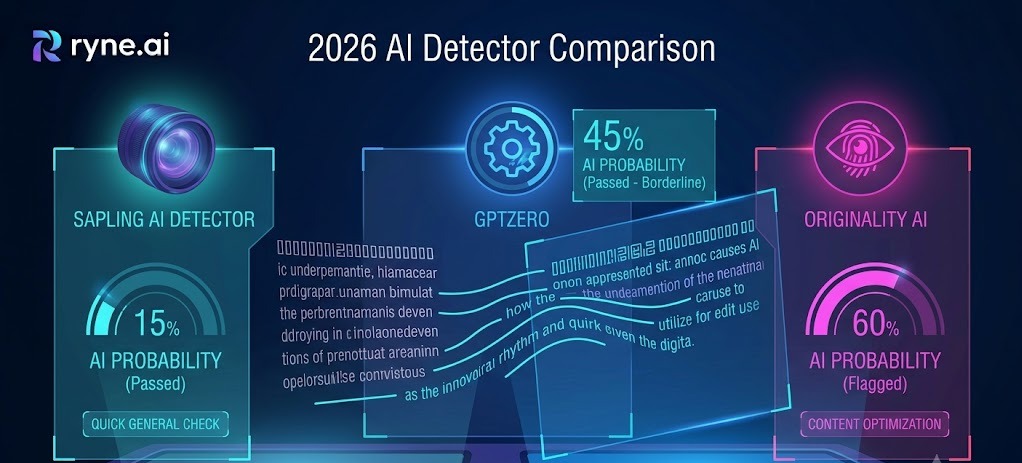
When people look at AI detection, they sometimes mention Sapling alongside names like GPTZero, Originality AI, or Copyleaks. GPTZero tends to center on school-related writing checks.
Originality AI pops up a lot in online content creation and search engine work. Copyleaks steps into bigger company needs, bringing in duplicate content tracking too.
Sapling feels less heavy than those options, yet handles everyday AI spotting without slowing down. Still, every tool stumbles when text has been smoothed out by humans after being made with AI.
The goal should always be creating plagiarism free content that offers value rather than simply trying to bypass Sapling AI.
AI Paraphrasing: Does It Help?
Sometimes machines tweak words well enough. Yet counting only on them misses the point when facing Sapling AI. Sentence shapes shift, sure, still traces linger—telltale pulses in how thoughts unfold.
Detection spots those subtle repeats, even after rewording runs its course. But pair that tech with real person edits, fresh thinking layered in, results start shifting. Natural tone creeps closer, works better for search too.
Relying purely on code? That path stalls. Better to treat bots like helpers, not bosses, somewhere mid-process.
How Human Touch Affects SEO
Most people find pages easier to follow when they sound like someone real wrote them. Because of this, search engines tend to favor words that flow well and hold attention. Stuff that slips past tools like Sapling feels less robotic—visitors stay longer, click around more.
When machine-made posts go unedited, they sometimes come off awkward or too similar to others online. That kind of repetition might push rankings down instead of lifting them.
Surprisingly, content that feels more human often ranks higher online. That’s what drives so many writers to mix AI tools with personal touch-ups—aiming for something search engines like without losing a natural voice.
Pros and Cons
| ✅ Pros | ❌ Cons |
|---|---|
| Most folks find Sapling AI Detector handy when spotting machine-written text without delay. | Real human work might get flagged by accident now and then. |
| Clear feedback on writing quality shows up fast. | Tricky rewrites of artificial prose slip through more than expected. |
| Grammar checks tag along too, plus clarity suggestions that pros often rely on. | It can stumble when faced with layered, shifting writing patterns. |
| Helps improve readability while reviewing AI-generated writing. |
Final Verdict
Even in 2026, Sapling's ability to spot AI-written text holds up—yet cracks appear when content feels genuinely human. Because subtle tweaks alone won’t trick the system, deeper reworking becomes essential.
Though basic pattern recognition catches robotic phrasing, layered edits blur digital fingerprints. Instead of just swapping words, thoughtful restructuring shifts the weight. When changes go beyond surface level, the chances to bypass Sapling AI improve, although there is never a guarantee.
Meaning matters just as much as structure here. Behind every low score lies careful tuning—not luck. Real clarity emerges only after several rounds of revision.
What readers get should matter more than what tools miss. Value stays hidden if formatting overrides substance. Even clever output fails without coherence. So refinement isn't optional; it shapes trust.
Conclusion
Most days, truth slips through cracks machines can’t quite reach. Still, Sapling AI Detector holds its ground when spotting words built by algorithms instead of people. As software learns new tricks, ways around alerts keep shifting shape overnight.
What matters most right now sits between real thought and borrowed phrases—somewhere honest. Some find gaps in the system using rhythm tweaks or reordering sentences just enough.
Yet sticking to clear ideas, smooth flow, and fresh thinking wins further ahead. Words that breathe like they were meant to be written rarely fail.

FAQs
1. Can You Completely Bypass Sapling AI?
True, though it demands careful reworking by a person. Often, basic changes fail to slip past Sapling’s filters. Rewritten words alone rarely cut through its checks.
2. Comparing Sapling AI and GPTZero?
One stands out in school settings, whereas the other fits wider uses with built-in help for crafting sentences. Still, each holds its ground depending on what you need.
3. Can a Tool That Makes AI Writing Seem More Like People Write Actually Do What It Claims?
True—though it needs hand adjustments afterward. Works better once cleaned up by a person. Still might trip detection tools even after tweaks. Clarity gets a boost, yet slipping past scanners isn’t certain.
4. Could Swapping Words Around Trick Bots That Spot Machine-Made Text?
Most simple rewording apps fall short since they leave core sentence structures untouched—exactly what Sapling AI spots.
5. Humanized AI Content and Google Rankings?
True enough, when the material reads smoothly, feels natural, and hits key search terms without sounding robotic, it stands a solid chance online. Quality matters most—clarity keeps people engaged while smart formatting helps engines notice it.


Turnitin AI Score Explained: What the Percentages Actually Mean
Curious about what your Turnitin AI score actually means? Read our comprehensive Turnitin AI score breakdown to understand percentages, false positives, and accuracy.

ZeroGPT Review 2026: Is It Still Accurate? We Tested 500 Samples
Check out our comprehensive ZeroGPT Review 2026. We tested 500 samples of human, AI, and humanized text to see if its AI text detector and accuracy rate hold up.