


Copyleaks AI Detector Review 2026: Can It Be Beaten in 2026?

Out of nowhere, artificial intelligence began reshaping how words appear on screens everywhere. Blog posts now go live quicker than ever before, thanks to writers leaning on smart machines. Minutes replace hours when companies need ads or slogans ready fast.
Even school tasks feel easier—students shape rough ideas into full pages without typing much at all. Saving time sounds great until you start wondering who actually wrote what you're reading.
Now there’s pressure to tell real human thoughts apart from computer-made text. A new kind of AI text detector stepped up to do just that. Surprise - it's still Copyleaks turning heads above the rest.
Not just flagging AI-made text, it doubles as a tool against copied work too. Still, with smarter bots typing away each month, folks find themselves asking: does Copyleaks hold up now in 2026?
Peeking behind the curtain of Copyleaks means watching it dissect text piece by piece. One moment it’s tracing patterns, the next it flags odd rhythms in sentences. Where does it catch fake machine chatter?
Turns out, even clever swaps between words won’t always fool its radar. Sneaky edits face scrutiny - each phrase weighed for authenticity.

How Copyleaks Detects AI Written Text
Company Background
What began as a tool for spotting copied work in education slowly changed shape when machines started writing more often. Schools first used it, then publishers noticed, later companies followed. Once algorithms grew smarter, so did the system—adding ways to catch words made by computers instead of people.
Now colleges rely on it, big firms depend on it, creative groups trust it before anything goes live. Not just checking duplicates anymore, it also examines how much seems artificially built.
One piece sees overlap, another judges origin, together they confirm truth without splitting tasks apart. Originality gets tested fully long before approval happens anywhere, helping organizations protect academic integrity.
Core Features
From the start, Copyleaks goes beyond spotting AI content. It checks documents for copied material while also judging how much a piece leans on artificial intelligence. Scoring breakdowns show exactly where concerns lie, giving clarity instead of guesses.
Code files are examined just like essays, using advanced source code detection tools built for software logic. In classrooms or offices, it works across many tongues, not limited by language barriers.
Schools link it directly into their teaching platforms without extra steps. Companies pull data automatically thanks to open access points. Instead of slapping labels, it walks through each result step by step.
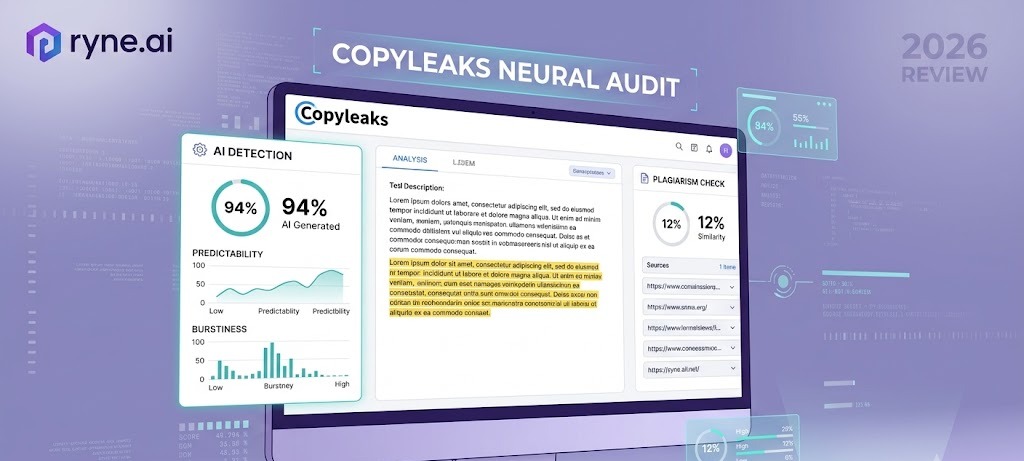
Understanding why something raises flags becomes possible, not left in the dark. Every report also includes a confidence-based detection score to explain the findings.
Who Uses Copyleaks?
From schools to companies, different groups turn to Copyleaks. Academic institutions count on it to help keep student work honest. Journals apply its tools when screening new papers for originality.
Firms run internal checks on documents ahead of public release. Content creators and ad agencies lean on it too, making sure machine-written drafts fit project rules. Since it spots copied text while flagging artificial writing, many offices now treat it like standard gear for managing heavy document flows.
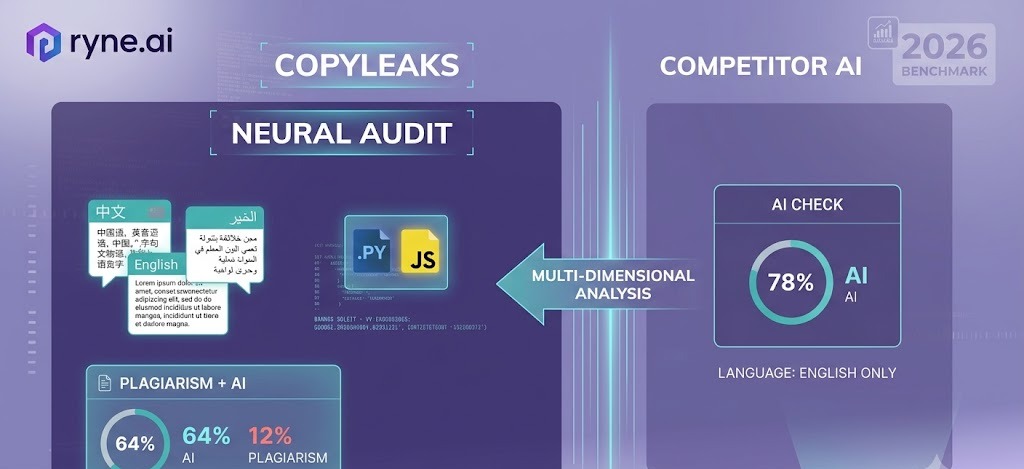
CopyLeaks Accuracy in 2026
Detection Accuracy
Still, one thing stands out—is Copyleaks accurate?
In most cases, yes. When spotting text made by current AI models like ChatGPT, Claude, or Gemini, it holds up quite well. Rather than looking for duplicates, its system studies how words are used, which helps spot even brand-new AI generated content. When schools or companies face stacks of papers daily, this tool offers a solid starting check.
Its overall accuracy rate remains among the strongest in the industry, though since it is just one version of artificial intelligence, think of it more as help for decisions instead of a final judgment.
False Hits and Missed Cases
Even top tools miss the mark now and then—Copyleaks included. Structured work by real people might get tagged as machine-made, creating occasional false positives that affect results.
Clever tweaks to AI drafts sometimes slip past the scanner, leaving gaps in spotting fakes. Updates keep shrinking those errors, yet glitches linger despite progress. Teams often pair software alerts with eyes-on checks rather than trust tech alone.
Accuracy Shifts Following Edits
Editing AI-written text more makes spotting it tougher. When people rework parts, shift how sentences go, toss in their own thoughts, or smooth things out, the chance of detection drops fast.
That result isn’t proof the tool messed up. It just shows polished AI help can feel surprisingly real. With AI shifting constantly, Copyleaks tweaks its tech often—aiming to stay sharp amid new ways people write.
So when people ask is Copyleaks accurate after heavy editing, the answer depends largely on how much human revision has taken place.
How Copyleaks Detects AI Content
AI Pattern Recognition
Most tools just hunt for matching phrases. Not this one. By studying rhythm, word choice, flow, and phrasing, it spots traces left by machines.
While others scan websites looking for duplicates, it zeroes in on subtle habits typical of synthetic writing. A number pops up showing the odds the text came from an algorithm through its detection score. Because of that, even fresh material—never posted anywhere—can still get flagged as AI generated content.
Source Code Detection
What sets Copyleaks apart? Its ability to perform source code detection. Most rivals stick to text-based files, yet Copyleaks dives into actual programming scripts too—checking for copied work or machine-generated patterns.
Schools offering coding courses find this helpful, just like tech firms evaluating developer contributions. Instead of limiting itself to essays and reports, it handles .py, .js, and similar formats alongside Word docs. Because of this mix, its reach goes further than typical tools built for one file type alone.
Language and Writing Review
With Copyleaks, different languages work just fine while tracking how thoughts move across pages. Not stuck on one chunk of text, it looks at tone, rhythm, and clarity all together.
Because of that broader view, spotting patterns gets sharper, particularly in extended pieces. Reviewers get clear breakdowns showing exactly what shaped the AI rating instead of facing a flat true-or-false answer.
Copyleaks Compared to Other AI Detection Tools
| Feature | Copyleaks | GPTZero | Originality AI | Turnitin |
|---|---|---|---|---|
| AI Detection | Excellent | Very Good | Excellent | Very Good |
| Plagiarism Checker | ✅ | ❌ | Limited | ✅ |
| Source Code Detection | ✅ | ❌ | ❌ | Limited |
| Enterprise API | ✅ | ✅ | ✅ | Limited |
| Best For | Business & Education | Education | SEO Agencies | Academic Institutions |
Copyleaks vs GPTZero
Most schools still lean toward GPTZero—it's straightforward and detects AI quickly. Yet Copyleaks brings together plagiarism checks, works across languages, and gives thorough reports. When handling many documents at once, institutions tend to favor Copyleaks since it builds broader validation tools instead of zeroing in solely on spotting AI. Though one stays common in classrooms, the other scales wider where needs grow.
Copyleaks versus Originality AI
Most folks who publish online or handle search rankings turn to Originality AI now and then. Though it tends to flag content aggressively, its accuracy isn’t perfect—false positives pop up more than one might hope.
On the flip side, Copyleaks plays it calmer, using graded certainty levels rather than hard yes-or-no labels. When faced with untouched machine-written material, both hold their ground fairly well. Extra tools baked into Copyleaks make it stand out for companies weighing options.
Copyleaks vs Turnitin
Most know Turnitin for checking student work. Yet when it comes to spotting AI, Copyleaks built something sharper from the start.
Its tools stretch beyond classrooms—offices use them too. Not stuck in one setting, it moves easily between school tasks and company needs. Institutions weigh both options, though firms tend to lean toward Copyleaks. Built different, used wider.
Beating Copyleaks in 2026?
Humanization Tools
Some people ask if AI detectors can be tricked or bypass AI detection. It can happen—just not every time.
Newer humanizing systems adjust how sentences are built, swap words around, alter flow, aiming for a more lifelike sound. A few tools actually reduce detection flags well.
Others tweak things lightly, leaving traces Copyleaks picks up easily. Updates roll out often for these scanners. So what dodges alerts now might fail completely later on.
Manual Editing
Human editing stands out when it comes to lowering AI detection marks. Personal stories, shifting paragraph shapes, adjusting how long sentences run, yet refining rhythm—these make text sound real.
Better scores come not just from tricks but from clarity readers notice, even if they do not say so. AI fits well as a first sketch tool, nothing more, letting people handle what matters last. Speed gains happen early, though only humans bring warmth near the finish line.
Where Copyleaks Still Leads
Still, despite how fast AI writing tools are advancing, Copyleaks holds up as a top-tier option for spotting machine-made content. Because it handles raw AI output with precision, longer texts stay reliably checked without drops in accuracy.
What sets it apart? A built-in mix of AI detection, plagiarism scanning, and coding analysis—all working together under one roof. While flaws exist in every system, ongoing upgrades help Copyleaks refine its edge. For groups serious about verifying originality, it stands firm through changes.
Copyleaks Pricing Models
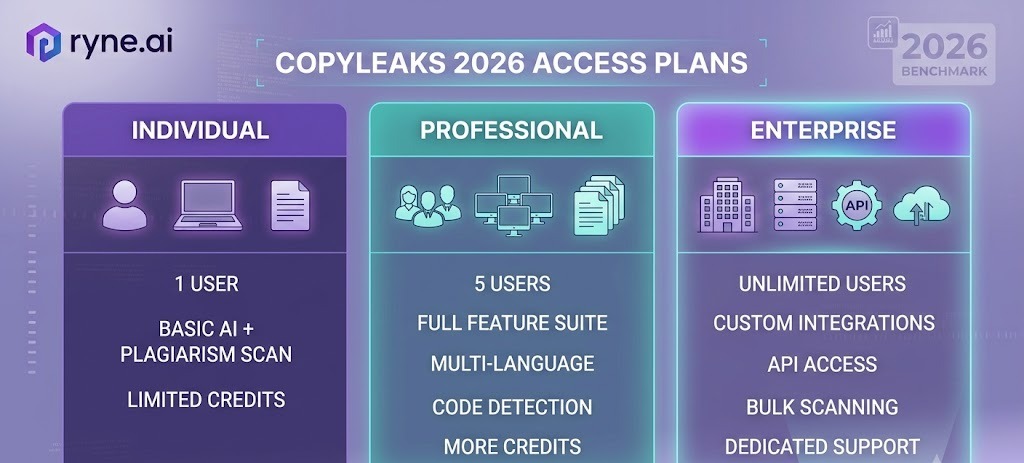
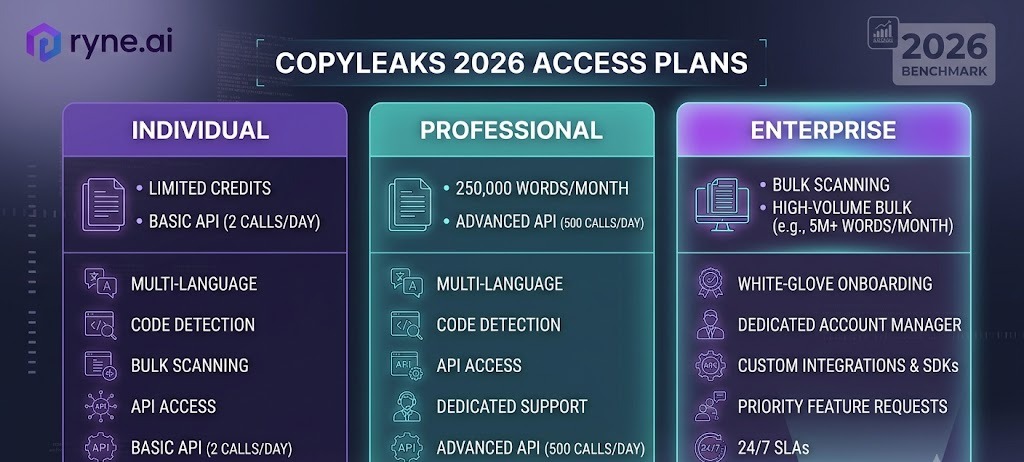
Some folks pick Copyleaks because it fits different needs. Freelancers get basic tools, whereas companies gain API entry, group controls, and higher scan capacity. Students and teachers benefit too, with features built into learning platforms to help keep work honest.
Its flexible pricing models serve individuals, schools, and enterprises alike. Price-wise, it sits above budget picks, yet its mix of spotting copied text and AI-written content feels fair to quite a few.
What matters most? The balance between depth and cost tends to land just right for those who rely on accuracy. Over time, that adds up.
Pros and Cons
| ✅ Pros | ❌ Cons |
|---|---|
| Accurate AI text detector with regular updates. | Occasional false positives on structured human writing. |
| Starts spotting copied text right inside the tool. Code origins get flagged without extra steps. Detection runs quietly alongside regular checks. | Content that's changed a lot by artificial intelligence could end up with poorer ratings. Though tweaks are common, heavy adjustments often backfire quietly behind the scenes. |
| Supports multiple languages. | Some top-tier pricing models cost more than occasional users might want to spend. |
| Reports show how sure the system is about each finding. What you get depends on that certainty level through its detection score. | |
| For schools, those who publish books, content creators, and companies needing clear materials. While it fits classrooms, book makers find it useful too—businesses use it alongside daily tasks. |
Who Should Use Copyleaks?
Most schools, educators, writers, firms, and freelancers rely on Copyleaks without even realizing how much they depend on it. When checking documents, spotting hidden sources becomes easier with its built-in detectors.
Picture a single screen showing both originality scores and AI patterns at once—that is where teams assessing essays, research, or software scripts gain an edge. From academic departments to media houses, those buried in text reviews often stick with it simply because cross-checking feels less like a chore.
Is Copyleaks Accurate?
Truth be told, is Copyleaks accurate? Overall, yes.
Copyleaks holds up well in 2026 and still stands among the top tools built to spot machine-written text. What makes it hold ground isn’t just spotting AI drafts accurately—it also checks copied material across languages, dives into code, and keeps adapting.
Nobody expects flawless output from any scanner out there. Even so, this one walks a steady line—sharp enough to catch patterns, smooth enough to use daily.
Most people lean on it more as a checkpoint than a verdict maker when judging originality. If you're still asking is Copyleaks accurate, its performance across education and business makes a strong case for it.
Conclusion
Right now, Copyleaks still stands tall when it comes to spotting AI-written text. What sets it apart is how it mixes content scanning, duplicate finding, and code analysis—few tools do all three so well.
Even if clever rewording tricks manage to bypass AI detection from time to time, this system keeps upgrading its core logic to match new AI versions.
If you're wondering is Copyleaks accurate, the answer is yes for most real-world use cases. When the real need is knowing where words come from, accuracy matters—and on that front, few platforms deliver like this one does.
Frequently Asked Questions
1. Does Copyleaks correctly identify AI written text?
True enough, Copyleaks spots nearly all untouched AI-written material. By 2026, it stands among the top tools built for identifying machine-generated text. If you're asking is Copyleaks accurate, its results on unedited AI content remain among the industry's strongest.
2. ChatGPT Content Detection by Copyleaks?
Most times, it shows up. When text comes straight from ChatGPT or tools like it, detectors usually catch it—though rewriting by hand tends to lower the flag. Still, some traces linger.
3. Can Copyleaks Show Wrong Matches?
True, though not very frequent. Sometimes, stiff or monotonous phrasing gets mistaken for machine output, leading to occasional false positives.
4. Copyleaks versus GPTZero and Originality AI?
What sets Copyleaks apart is how it pulls together AI analysis alongside tools that spot copied text. It checks multiple languages, not just one or two.
Source code gets scanned too, which many overlook. Schools find it useful, yet companies rely on it equally. One reason fits both worlds: everything works under a single system.
5. AI and Copyleaks Can They Fully Bypass Each Other?
Nothing works every time. Even when people edit by hand, lowering the AI score isn’t certain because Copyleaks keeps improving what it looks for. New tricks get spotted sooner now. Old fixes fade fast.


ZeroGPT Review 2026: Is It Still Accurate? We Tested 500 Samples
Check out our comprehensive ZeroGPT Review 2026. We tested 500 samples of human, AI, and humanized text to see if its AI text detector and accuracy rate hold up.

AI Humanizers for Medical Content: What's Safe and What Isn'
Learn the safety rules of using an AI humanizer for medical writing in 2026. Discover what is safe to humanize, how to maintain compliance, and why human verification remains critical.