


Best AI Learning Assistant: The Complete Guide to AI Study Planners

Introduction: Why Traditional Study Methods Are Obsolete
You're still using outdated study methods. Most students and professionals are. They're grinding through hours of textbooks, memorizing without understanding, and hoping something sticks. They're treating study time like prison time—something to endure rather than a strategic system. It's inefficient. It's exhausting. And it's completely unnecessary in 2025.
Here's the reality: an AI study planner isn't a nice-to-have anymore. It's the baseline tool that separates high performers from everyone else. The best students aren't studying harder. They're studying smarter. They're using AI learning assistants that adapt to their specific needs, provide personalized feedback in real-time, and transform how they actually retain information.
The numbers prove this. Research across multiple universities shows that students using AI learning assistants achieved significant improvements in academic performance while spending less time studying. One study found students experienced reduced study hours alongside increased GPA—the exact outcome everyone wants but nobody achieves with traditional methods.
What Is an AI Study Planner? Understanding the System That Actually Works
An AI study planner isn't just a calendar or a note-taking app. It's an intelligent system that understands your specific learning patterns, identifies your knowledge gaps, and creates personalized study strategies designed specifically for you.
Think about traditional studying. You open a textbook. You read pages. You highlight passages. You take notes. None of this tells you what you actually don't know. You're studying based on blind assumptions, not data. An AI study planner changes this fundamentally.
A real AI learning assistant works differently. It assesses what you already know. It identifies specific gaps in your understanding. It creates targeted learning pathways customized to your actual needs. It provides immediate, specific feedback on every concept you attempt. It adapts difficulty based on your performance. It tracks your progress in real-time. This isn't magical. It's systematic. It's precise. And it works.
The best AI learning assistants serve two populations simultaneously: students trying to improve grades, and professionals trying to develop skills for career advancement. Both groups benefit from the same core functionality: personalization, immediate feedback, and adaptive learning pathways.
The Research: Why AI Study Planners Actually Deliver Results
The evidence is overwhelming. Research from EHL Hospitality Business School shows that 86% of students rated their AI learning assistant as "extremely" or "very" helpful, with the tool effectively supporting brainstorming (86%), market analysis (43%), and feasibility analysis (43%). These aren't marginal improvements. These are substantial performance gains.
But what's most important is understanding why this works. A comprehensive study involving 455 students across Egypt, Saudi Arabia, Spain, and Poland found that AI-powered learning tools positively influenced intrinsic motivation—the internal drive that actually predicts long-term learning success. Students weren't just getting better grades. They were becoming more motivated learners.
Traditional teaching methods create external motivation—you study because of exams or grades. AI learning assistants create internal motivation—you study because you understand concepts and feel capable. This distinction matters because intrinsic motivation is what separates students who retain knowledge from students who forget everything after the exam.
How AI Study Planners Transform Your Learning Process
Personalization: The Foundation
An AI study planner starts by assessing your current knowledge. This isn't a generic quiz. It's a diagnostic system that identifies exactly which concepts you understand, which ones you partially understand, and which ones you need to master. This assessment drives everything else.
Once gaps are identified, the AI doesn't give you generic study materials. It creates customized learning pathways. A student struggling with calculus derivatives gets different content, different examples, and different difficulty progression than a student who needs help with integration. The system adapts to the individual.
Real-Time Feedback: The Accelerator
Here's where traditional methods completely fail. You take a test. You wait days for results. By then, misconceptions are hardened into habits. An AI learning assistant eliminates this delay. You attempt a concept. You get immediate feedback. You understand why your approach was wrong. You practice the correct approach immediately. Your learning accelerates because errors are caught and corrected in real-time, not weeks later.
This matters enormously. Research shows that AI course assistants improve academic performance significantly through real-time assistance and personalized feedback, directly affecting grades. The specificity of the feedback is critical—it's not just "you're wrong." It's "you applied the formula incorrectly here; the actual steps are..."
Adaptive Difficulty: Never Boring, Never Crushing
Traditional courses assume all students learn at the same pace. This is obviously wrong. Some students need more challenge. Some need more support. Both get frustrated with one-size-fits-all instruction.
An AI study planner adjusts automatically. Master a concept? The difficulty increases. Struggle with a concept? The system provides more support and practice. You're always working at the edge of your capability—the exact condition where learning happens fastest.
The Benefits: What Actually Changes When You Use an AI Learning Assistant
Time Liberation
The first benefit everyone notices: you study less while learning more. This isn't because the AI is easy. It's because every minute of study targets genuine learning instead of wasted time on already-mastered material. You're not reviewing concepts you know. You're not grinding through textbook pages hoping something sticks. You're strategically addressing exactly what you don't understand.
Knowledge Retention That Actually Works
Traditional studying relies on cramming and rereading—low-impact techniques. An AI learning assistant uses evidence-based methods: spaced repetition, retrieval practice, and interleaving. These aren't new concepts. They've been proven effective for decades. But traditional teaching ignores them. An AI system implements them automatically.
When you use Ryne's AI humanizer to refine what you've learned], you're ensuring that your understanding is expressed clearly and precisely. This final step transforms internal knowledge into communicable expertise—the difference between understanding something and being able to explain it to others.
Reduced Anxiety and Increased Confidence
There's a psychological benefit that matters enormously. When you know exactly what you don't understand, and you get immediate feedback showing improvement, your confidence increases. You're not guessing. You're not hoping. You're seeing measurable progress.
Research from multiple studies confirms that AI learning assistance reduces stress associated with academic workloads and contributes to higher overall well-being among students. This isn't incidental. Students who feel supported and capable perform better. Period.
Skills That Transfer
A critical measure of learning is transfer: can you apply what you learned in one context to a new context? This is where the humanize and personalize aspects matter most. An AI study planner doesn't just teach you facts. It teaches you how to think about problems. It develops problem-solving approaches that transfer to new situations.
The Honest Limitations: What AI Learning Assistants Can't Replace
You need to understand the boundaries. An AI study assistant is extraordinarily effective at certain things. It's less effective at others.
An AI learning assistant excels at:
- Providing immediate, specific feedback
- Personalizing learning pathways
- Delivering 24/7 availability
- Adapting difficulty based on performance
- Implementing research-backed learning techniques
- Making learning more engaging
An AI learning assistant struggles with:
- Developing critical thinking and creative problem-solving (mixed research results show improvements in some areas but potential declines in others)
- Replacing human mentorship and guidance
- Understanding complex human context and nuance
- Providing emotional support that only humans can give
- Ensuring depth of understanding versus surface-level mastery
This matters. Research shows that while AI is highly effective for improving academic performance, excessive reliance on AI tools can lead to procrastination, memory erosion, and declined critical thinking if students don't maintain their own analytical engagement.
The key insight: an AI study planner is a supplement to human learning, not a replacement. It should enhance your independent thinking, not substitute for it.
Features That Separate Best-in-Class AI Learning Assistants
Not all AI study assistants are equal. The best ones share specific characteristics:
Personalization That's Genuine - It adapts to your learning pace, not just your test performance. It identifies knowledge gaps automatically. It creates learning pathways specific to your needs.
Feedback That's Specific - Generic feedback ("good job" or "try again") is useless. Real feedback explains exactly what's correct, what's wrong, and why. It shows the correct approach.
Availability Without Dependence - 24/7 access to support is valuable. But the tool should encourage independent thinking, not create dependency. You should use it to verify your thinking, not to do thinking for you.
Integration With What Matters - The best AI learning assistants connect to actual coursework, actual professional goals, or actual skill development needs. They're not generic tools applied to learning. They're learning tools designed for your specific context.
Quality Feedback on Expression - Learning is only complete when you can express what you know. When using Ryne's humanizer technology, you're ensuring that what you've learned through the AI study assistant gets expressed with clarity and authority. This final step transforms internal knowledge into communicable expertise.
Comparing AI Study Planners: What You Should Actually Evaluate
When you're evaluating options, don't get distracted by marketing claims. Evaluate actual features:
Does it assess your current knowledge baseline? Or does it assume you're starting from zero?
Does it create personalized learning paths? Or does it give everyone the same content?
Does it provide specific, immediate feedback? Or generic praise and vague corrections?
Does it adapt difficulty? Or does it use one level for everyone?
Can you verify your understanding? Or does it just tell you whether you're right?
Does it integrate with your actual learning goals? Or is it a generic tool applied to learning?
These questions separate tools that genuinely improve learning from tools that just feel helpful.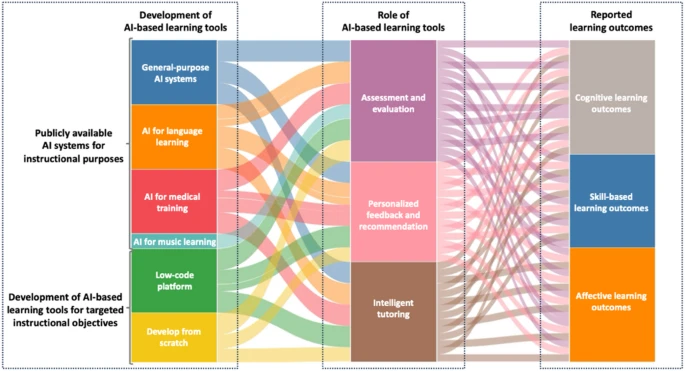
Implementing an AI Study Planner: The Practical Framework
This isn't just about using a tool. It's about integrating it into a real learning system.
Phase 1: Assessment
Start by letting the AI assess what you already know. This takes maybe 30 minutes per subject but gives you complete clarity about your actual knowledge gaps versus your perceived understanding.
Phase 2: Focused Learning
Use the personalized pathways the AI creates. Don't try to study everything. Study exactly what you need to master. This is where the time savings happen—you're not wasting hours on already-known material.
Phase 3: Practice and Feedback
Practice problems, explanations, and applications with immediate feedback. This is active learning, not passive review. Your brain is working. You're getting corrected. You're improving.
Phase 4: Integration and Expression
Once you've mastered material, express it. Write explanations. Discuss concepts. Teach someone else. This is where real learning happens—when you can communicate what you understand. If your written expression feels awkward or unclear, Ryne's Humanizer helps transform your expression from uncertain academic tone to confident, clear communication.
The Future: Why This Matters for Your Long-Term Success
The reality is straightforward: AI study planners are becoming the standard tool for serious learners. Students who don't use them are at a disadvantage. Professionals who don't use them for skill development are falling behind peers who do.
This isn't about being tech-forward for the sake of it. It's about understanding that an AI study planner delivers what learning actually requires: personalization, feedback, adaptation, and the ability to identify exactly what you don't know. Traditional methods don't deliver this. No amount of willpower or effort makes traditional methods deliver this.
The best AI learning assistants will continue evolving. They'll get better at detecting knowledge gaps. They'll improve at adaptive difficulty. They'll refine feedback quality. The tools you have access to today are just the beginning.
But the fundamental advantage they deliver—personalization, immediate feedback, adaptive learning pathways, 24/7 availability—isn't going anywhere. Students and professionals using these tools will consistently outperform those who don't.
Conclusion: Making the Switch
You can keep studying the old way. You'll work harder. You'll waste time. You'll retain less. You'll feel more anxious. You'll get worse results. Or you can use an AI study planner and study smarter.
The evidence is clear. The tools are available. The only question is whether you're going to use them.
The best AI learning assistants aren't perfect. They're not replacements for thinking. They're not solutions to all learning challenges. But they're dramatically better than traditional methods at the core function: helping you identify what you don't know and master it efficiently.
Find a tool that personalizes, adapts, and provides genuine feedback. Integrate it into your learning system. Use it to identify gaps, learn targeted material, get immediate feedback, and refine your understanding. When you need to express what you've learned—in essays, presentations, or professional communications—ensure your expression matches your knowledge by using tools that humanize your communication.
That's the system that works. That's what separates high performers from everyone else. That's how you study smarter, learn faster, and achieve better results.


How to Study with AI: Maximize Learning Efficiency
You're studying wrong. Most students are. They spend hours on textbooks, highlight passages, take notes nobody reads, and call it studying. Then they're shocked when results don't match the time invested.

AI Writing Tools: The Ultimate Guide to Academic Excellence
Soon you will discover something that most students don’t realize until too late – that the way you were taught to write is old-fashioned. Not old-fashioned in the same way handwriting is. It’s outdated in the same way that consulting a physical encyclopedia is outdated because of Wikipedia. The instruments have been altered. The levels have modified. The rivalry has shifted. The majority of pupils still grapple with their essays in the same way as their parents did 20 years ago.