


5 Tools That Actually Speed Up Paper Writing

Your essay deadline is in three days. You've stared at a blank document for an hour. The tension is rising, your enthusiasm is decreasing and you find yourself spending needless hours on things that only seem to make things worse.
This is where most students hit a wall. But there’s a better way and it’s not cheating.
The right AI essay tools don't write your essay for you. You can avoid dealing with busywork when you make use of their solutions. Thus, enhancing your productivity. When you get an edit and proofread, they organize your research, build a structure, polish the grammar and do the mechanical drudge work that costs hours without adding anything to your thinking.
Here's the reality: students are doing their assignments in 3-4 hours which earlier took 8 to 10 hours to do. Not by cheating. By actually being smart about the system.
We have evaluated and chosen the top five essay tools available right now. Each one focuses on a different issue pertaining to writing an essay. Properly applied, and you can reclaim the hours that your competitors waste.
1. Ryne AI Essay Composer — The Speed Play for Drafting and Humanization.
What it does: Ryne Essay Composer quickly generates a first draft based on your outline. Feeding it your topic, key points, and references allows it to generate structured and academic content. After that, your writing will not sound robotic still it will ensure that it is not plagiarized.
Why this saves time: Most students, use up 2-3 hours, blank page ko ghoorte hue, theek theek opening paragraph likhne koshish mein. Ryne Essay Composer demolishes this friction. You get a structured draft in minutes, not hours. The essay maker uses academic conventions. Moreover, provide proper transitions and flow from one section to the next.
What makes Ryne different than generic AI writers is the humanize AI text feature. Many tools that use AI for content writing produce an output that stands out as robotic, i.e. predictable sentence structures, repeated phrasing, and that all-too-familiar machine learning-y flavor that shouts red flags. Ryne's humanizer tool transforms clinical output into content that flows naturally, varies in tone properly, and reads like a student wrote it.
Your professor will not only grade you on content. They're reading for authenticity. Work that sounds robotic gets scrutinized. Work that is natural will generally be fairly judged based on ideas rather than suspicion.
Step-by-Step Workflow: Using Ryne Essay Composer.
Step 1: Prepare Your Source Material (5 minutes). Put together your research notes, key sources, and thesis. You don't need polished outlines - rough bullet points are fine. Open Ryne Essay Composer and select your essay length (1,500-word, 2,500-word, 5,000-word).
Step 2: Input Your Topic and Outline (5 minutes). Type in the topic of your essay, your main arguments and any key points you want included. For example: Subject: The Effect of AI on Academic Integrity → Main Points: (1) Current detection measures, (2) Students’ outlook, (3) Ethical frameworks, (4) The Future Solutions.
Step 3: Generate Initial Draft (2-3 minutes). Simply click on 'Generate Draft'. Ryne will create the entire first draft complete with introduction and body paragraphs, transitions and conclusion. You don’t get a perfect piece you can just submit. You get structure and content to work with.
Step 4: Apply Humanization Filter (2 minutes). Before any editing, use Ryne's AI humanizer text feature. By doing this, the AI-generated diction becomes more natural and sentences have varied lengths. The goal: to make it sound like a student wrote it, not a machine.
Step 5: Edit and Customize (30-45 minutes). Review the humanized draft. Incorporate specific examples, adjust your tone where necessary, and use your sources properly. You add value through your thinking, whereas the mechanical framework will already exist.
An essay draft that is full & structured in under 1 hour instead of staring at a blank page and drafting manually for 3 – 4 hours.
The practical advantage: Start with Ryne Essay Composer free trial to test it. Generate a draft of a 2,000-word essay from scratch. Most users state that they cut 60 70 percent from their first draft time. The humanizer then makes sure that what you send will not get flagged by detection systems such as Turnitin or GPTZero.
Great for students who have already researched their topics, but struggling with structuring and drafting. Writers who need to transform rough notes into polished copy, without being stuck for the entire day in mechanical writing.
2. QuillBot — The Refinement Specialist for Editing and Clarity.
What it does: QuillBot is very useful when it is in the editing phase. Once you write or generate draft content, QuillBot rewrites for clarity, tone, and style. It provides you with seven writing modes including Fluency, Academic, Formal, Simple, Creative, Expand and Shorten for matching the voice to the assignment.
Why this saves time: Most students submit first drafts so they save time. No first draft is perfect and most have problems; awkward phrasing, sentences that wander, tone issues, jargon, redundancy. Your meaning needs to be uncovered by your professor instead of your ideas. You do not lose points because of weak thinking but rather due to shoddy execution.
QuillBot fixes this. Rather than rewriting every clunky sentence, which takes 2-3 hours for a 3,000-word essay, you simply paste your draft and select the mode that fits your assignment. With this rewriter tool, your writing will automatically be restructured while maintaining your argument.
Your wording will be switched to fit the standards of your university in terms of level of formality, terminology, citation integration, etc. An Academic rewriter normally boosts your essay score with just one pass because your writing suddenly sounds more professional without being less accessible.
Step-by-Step Workflow: Using QuillBot for Essay Refinement.
Step 1: Copy Your Draft (2 minutes). Take your completed essay draft (whether from Ryne Essay Composer or your own writing) and copy it into QuillBot's editor.
Step 2: Select Academic Mode (1 minute). Select “Academic” from the seven writing modes of QuillBot. This mode specifically targets university conventions: formal vocabulary, appropriate complexity, and professional tone.
Step 3: Run Initial Pass (3-5 minutes). Let QuillBot process your entire essay. It will show the changes and the before/after pictures. Review the suggestions. Some are essential; some are optional tweaks.
Step 4: Accept/Reject Changes Selectively (10-15 minutes). QuillBot doesn't force changes. Go through section by section. Accept rewrites that improve clarity. Discard those that inaccurately alter your intent or tone. You maintain control—the tool just suggests improvements.
Step 5: Review for Tone Consistency (5-10 minutes). After accepting changes, scan the essay for overall tone. Does it sound academically appropriate? Does your voice come through? Make final tweaks manually if needed.
Result: A mechanically edited essay with academic level writing in 20 to 30 minutes instead of doing it manually in 2 to 3 hours.
Using the Academic mode has a distinct practical benefit, and it follows your custom workflow. Write your first draft or generate using QuillBot > Select Academic mode > Let QuillBot refactor your draft > Review and copy your improved version > Following these steps saves you time which you can devote in actually making a more persuasive argument and not re-writing sentences.
With QuillBot, a student who spends two hours on manual editing and rephrasing can do that in 15-20 minutes.
Most suitable for those students who have ideas but can’t express them clearly. Anyone trying to convert casual writing into academic tone. A better option would be to eliminate any unnecessary filler language and redundancy.
3. Jenni AI — The Research Beast for Citations and Complex Papers.
What it does: Jenni AI is built for academic research. Jenni is different from essay generators as it does citation management, bring in sources and complex structures like literature review, research paper, thesis and journal submission. It has access to academic databases and builds essays from real research rather than general LLM knowledge.
Why this saves time: Researching takes up a lot of time when writing essays. So, it is vital that you do it well. Finding sources relevant for your topic is almost as tough as writing the essay itself. You go through dozens of relevant papers to extract key information. Then you organize your findings and see how you should integrate the citations. Finally, you make sure you are not just summarising but synthesising.
Students who have access to tools such as Jenni save 40-50% of their literature review work according to research. The platform doesn't only cite sources, it also explains them. You may have questions for your PDFs and they will provide an answer that summarizes the complex paper for you. In addition, it can organize all the findings into structured outlines automatically.
Jenni helps prevent plagiarism by making attribution easy.
If you have no trouble citing and integrating sources, you probably do it correctly. Students suffer from pain when they paraphrase without attribution or integrate without citing source. Jenni removes that temptation.
Step-by-Step Workflow: Using Jenni AI for Research-Heavy Papers.
Step 1: Upload Your Sources (5 minutes). Collect your academic materials like PDFs, research papers and articles. Upload them to Jenni AI's library. You can upload 10-15 sources at once.
Step 2: Define Your Research Question (3 minutes). State what you're researching. For example: Jenni uses this to organize your sources around your central question. "What are the impacts of social media on teenage mental health?"
Step 3: Generate Source Summaries (5 minutes). Jenni automatically summarizes each source and extracts the key findings. Instead of going through 20-page PDF files, you get a one-page summary for each paper. You comprehend that each source offers insight to your argument.
Step 4: Ask Research Questions (10 minutes). You can use Jenni’s chat feature to ask questions about your sources. For example, “What did Smith et al. 2022 find about social media’s correlation to anxiety?” or “How do Smith et al. 2022 findings compare with Lee et al. 2021 findings?” Jenni cross references your sources and collates findings.
Step 5: Generate Structured Outline with Citations (10 minutes). Jenni then produces a comprehensive outline with the format of your argument, findings from every source integrated, as well as citations formatted properly. Making citations has never been easier.
Step 6: Use Outline to Draft Your Paper (45-60 minutes). If you have a researched, cited, and structured outline, drafting then becomes mechanical. You flesh out each section with analysis and examples. The tough work is now done.
Result: A research-intensive paper with 15+ sources that is correctly integrated and cited in 90 minutes instead of 5-7 hours.
It’s a practical advantage. For a 5,000-word research paper with over 15 sources, the traditional workflow alone takes about 5-7 hours on research organization and citation management. With Jenni, that drops to 2-3 hours. You are not writing less. You are writing more effectively with better organized sources and correctly formatted citations built in from the start.
Best for: Research-heavy assignments. Literature reviews. Thesis and dissertation work. A 10-Word Essay that Breaks Down the Essential Components of an Essay. PhD candidates and graduate researchers managing many complicated projects.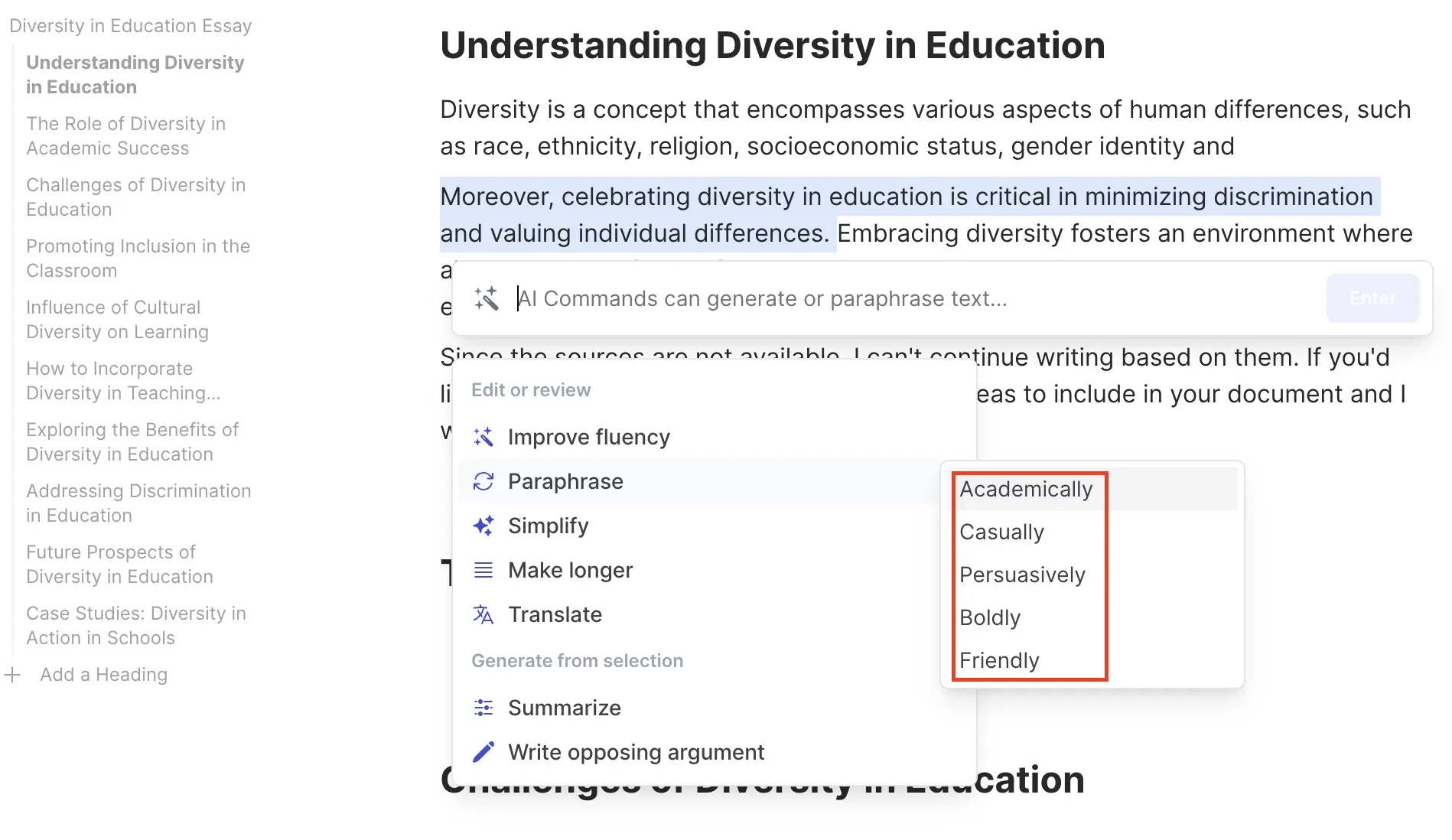
4. Grammarly — The Security Checkpoint for Grammar and Plagiarism Prevention.
What it does: Grammarly serves as a safety net for you. It checks grammar, spelling and punctuation, tone and consistency, plagiarism all at the same time. The AI can spot errors that humans miss, especially when you are on a deadline and working so fast your proofreading becomes a joke.
Why this saves time: There is no point in writing faster if you will lose 30 points for mechanical errors and plagiarism flags. Grammarly prevents that. It identifies errors that other software miss like comma splices, subject-verb disagreements that are buried in complex sentences, overuse of words, tone issues.
The plagiarism checker is critical. It analyzes your essay and provides instant feedback on any unintentional overlap with billions of web pages and academic sources so you can fix it before you submit. If this occurs, submission detection will reveal the violation and destroy the grade.
With Grammarly's assistance, you can receive immediate feedback, allowing you to correct mistakes instantly while you write rather than during a difficult review later.
Step-by-Step Workflow: Using Grammarly for Final Quality Assurance.
Step 1: Install Grammarly Extension (2 minutes). Get Grammarly as a browser extension or web editor. You can use it on a lot of programs like Microsoft Word or Google Docs.
Step 2: Paste Your Completed Essay (1 minute). Move your final draft into Grammarly's editor. Don’t wait until the end to use it. Use it throughout writing. At the end, do one last pass through your entire essay with it.
Step 3: Review Grammar and Tone Suggestions (10-15 minutes). Grammarly highlights errors and suggestions in real-time. Go through systematically.
- Fix grammar and spelling mistakes with a red underline.
- Blue underlines mean stylistic suggestions to review and accept or reject.
- Make your voice sound professional to see if it fits to the academic requirement.
Step 4: Run Plagiarism Check (2 minutes). Click the plagiarism report button. Grammarly checks your paper against billions of web pages and academic papers. Review flagged sections.
Step 5: Address Plagiarism Flags (5-10 minutes). If Grammarly flags similar text.
- Make sure it’s properly cited. If yes, keep it (citations are expected to match sources).
- If it was accidentally not cited, just cite it using Grammarly’s integration.
- Make sure not to be over-reliant on the other person's words, otherwise rewrite it.
Step 6: Final Mechanical Review (5 minutes). Scan through once more for any missed errors. You're done.
You will get your essay mechanically polished and 20-30 minutes plagiarism check instead of the usual 45-60 minutes manual proofreading.
The college student is spending, on average, about 45 minutes to an hour on the final proofreading stage, catching 40 to 60% of errors. And, with the use of Grammarly, this same level of mechanical correctness takes place in approximately 10 minutes for 100% accuracy. The plagiarism check works continuously so you will not accidentally use someone else’s work without a proper attribution.
Best for: Every student. Period. This is non-negotiable. The premium one gives advanced suggestions and checking for plagiarism while the free version has all the basic suggestions The Premium version will pay for itself the first time it saves your flagging.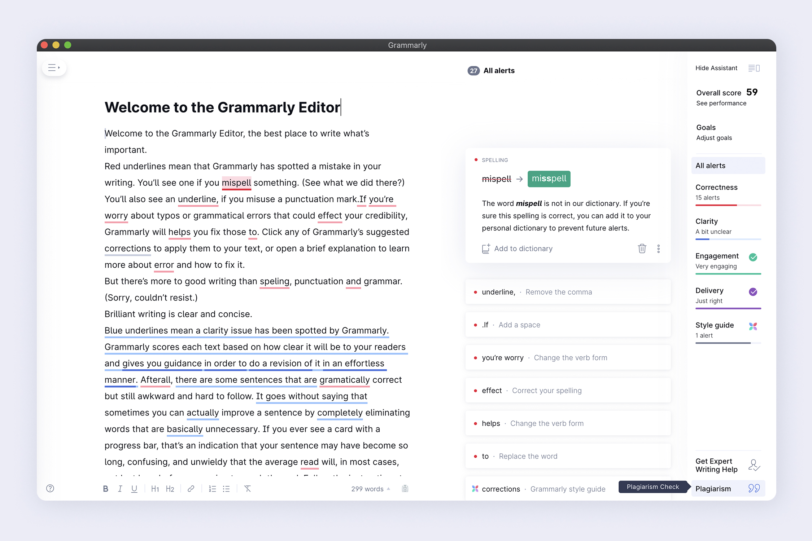
5. Consensus — The Research Shortcut for Finding Evidence That Actually Exists.
What it does: Consensus is a specialized search engine designed for academic research. All you do is ask Consensus a question instead of googling and hoping for peer-reviewed studies. Consensus then returns summaries of relevant research papers along with confidence scores denoting research consensus.
Why this saves time: Students waste hours scanning academic sources, reading irrelevant papers, and trying to figure out if findings are in fact backed by empirical research. Consensus eliminates this. You ask it something like, “How do AI tools impact student academic performance?” It returns papers with summaries, showing exactly which studies support which claims and with what level of agreement.
Studies show that using AI-powered academic search tools can save 40-50% of literature review time. Consensus goes beyond its competitors because it focuses on peer-reviewed sources and indicates levels of concurrence across studies. You’re not left guessing whether your evidence is strong - you see the actual research consensus.
It stops a huge essay killer claims unsupported by real research. Professors catch this immediately. Due to the consensus, you can find legitimate research about anything so quickly, there’s no reason to not back your claims with research.
Step-by-Step Workflow: Using Consensus for Evidence-Based Claims.
Step 1: Identify Your Key Claims (5 minutes). Write down 5-7 important things you claim in the essay which require research to back them. Some claims include: (1) “AI detection tools are 85% accurate.,” (2) “Students are spending on average 8 hours per essay,” (3) “Using humanizing text in AI reduces flags on originality scanner.”
Step 2: Search Each Claim on Consensus (10-15 minutes). Go to Consensus.com. Type a natural question for each claim, for example: How accurate are AI detection tools? Consensus runs a search of peer-reviewed studies and retrieves results ranked by relevance plus level of agreement.
Step 3: Review Research Consensus Scores (10 minutes). A green indicator denotes strong agreement; yellow indicates mixed findings, and red, disagreement. You can quickly assess if your assertion is backed by a strong consensus or divided research.
Step 4: Select Supporting Studies (10-15 minutes). Select 2-3 studies that provide the strongest agreement for each claim. Consensus gives you highlights so that you don't need to read every paper.
Step 5: Integrate Citations into Your Essay (10 minutes). Copy the citation information from Consensus. Similarly, this means that your essay must include the findings. Your claims are now backed by peer-reviewed research.
In just 45 minutes, five critical essay claims were adequately grounded in academic research. That saves the time-consuming manual source searching that would take over 90 minutes.
If a student is required to cite five different claims they will spend about 90 minutes locating sources to back them up. With Consensus, that's 20-25 minutes. You quickly locate relevant, peer-reviewed studies and get confidence scores that tell you whether the research strongly, moderately or weakly supports your claim. No wasted effort on irrelevant papers.
Best for: Argumentative essays. Research papers. A task that requires citing scholarly articles. Since persuasive essays require evidence to support all claims, students need to find evidence to prove their arguments.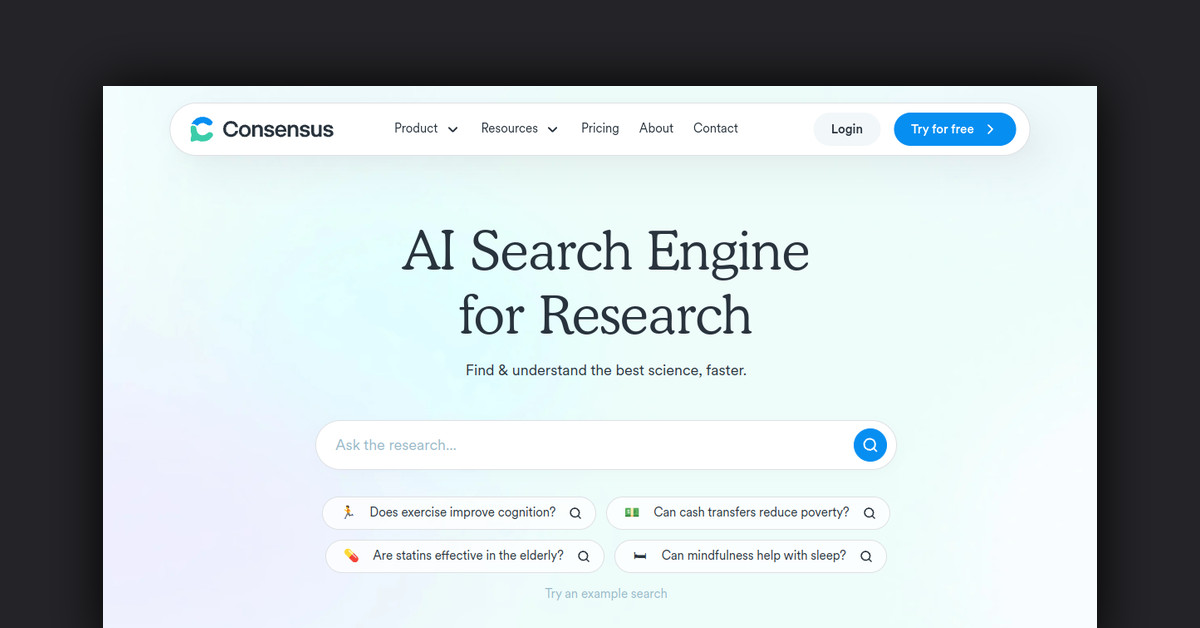
How These Tools Actually Save 5+ Hours on Your Next Paper.
You do not save time because one tool does it all. Every tool is made to eliminate a specific type of time killer.
Research Phase (Usual: 3-4 hours | With Tools: 1.5-2 hours). Consensus cuts research time by 50%. You find proper, useful, academic sources in minutes instead of hours. No dead ends. No irrelevant papers. No guessing about research consensus. Evidence gathering can take up to 30% of your session, but you're done. Learn more about essay writing AI approaches to research.
Drafting Phase (Usual: 2.5-3 hours | With Tools: 45 minutes - 1 hour). Ryne's Essay Composer generates structured first drafts from outlines in minutes. The humanize AI text feature ensures it reads naturally. You’ve passed the page paralysis that usually takes up an hour. Your first draft is usable. You're not starting from zero.
Revision and Refinement (Usual: 1.5-2 hours | With Tools: 20-30 minutes). QuillBot can rewrite text for clarity and tone in a single go. Grammarly catches mechanical errors in real-time. All you do is request changes and rephrasing in the document. Mechanical polish is automated.
Quality Assurance and Citation Verification (Usual: 1-1.5 hours | With Tools: 10-15 minutes). Grammarly's plagiarism checker runs continuously. Jenni’s citation management helps you keep your sources organized. You’re not worrying about plagiarizing accidentally or misformatting citations.
Total time reduction: 5-6 hours on a typical 3,000-word essay.
The difference between staying up all night and finishing by a decent hour. The difference between a paper filled with errors and a manuscript free of errors. It's the difference between hating handling the assignment and actually having the mental energy to make your ideas stronger.
The Complete Workflow: From Topic to Submission.
This is how a high achieving student uses all 5 tools effectively.
Day 1 (2 hours):
- Use Consensus to research your topic and validate claims (30 minutes).
- Use Jenni AI to organize sources and create a structured outline (30 minutes).
- Use Ryne Essay Composer to generate initial draft from outline (30 minutes).
- Apply Ryne's humanizer to make draft read naturally (20 minutes).
Day 2 (1.5 hours):.
- Use QuillBot to refine essay tone and clarity (20 minutes).
- Use Grammarly to catch errors and verify no plagiarism (15 minutes).
- Manual edits and personalization (45 minutes).
- Final read-through and submission (10 minutes).
Total: 3.5 hours instead of 9-10 hours.
Real Value: You Still Do the Thinking.
These instruments will not do your thinking for you. They don't replace analysis. They don't let you skip learning the material. They do not replace knowing your subject really well.
They alleviate work stresses that burden your time to think.
When research, planning, drafting, and editing go smoothly, you have more time to focus on what matters: creating strong arguments, integrating evidence, spotting counterarguments, revising your thesis.
Ryne’s humanizer, QuillBot’s refinements and Consensus’ research speed-ups don’t dilute academic integrity. They strengthen it. They make proper citations frictionless. They make clear writing automatic. They make finding solid research fast. All these practices support academic standards rather than undermine them.
This explains how the old broken system is where students waste hours doing busywork before they even start thinking. And how the smart system where mechanical work is taken care of by automation, meaning your time goes into actual intellectual work.
The Bottom Line.
You have two choices.
Option 1:* You can spend 8-10 hours doing it the old way. Researching the wrong things, staring at a blank page, rewriting manually, doubting your citations, the final proofread.
Option 2: Use proper tools and write that same essay in 3-4 hours with better research backing, clearer writing, and zero plagiarism risk.
The tools exist. The evidence supporting their effectiveness is clear. The time savings are dramatic. It's possible to use something that works but the bigger question is whether you are going to continue playing the broken game.
Start with Ryne Essay Composer for drafting and humanization. Use QuillBot to fine-tune your work. Consensus will help you in the research. Grammarly will keep it safe. If you’re doing a complex research task, then use Jenni.
Your next essay doesn't have to be an ordeal. The system that makes it one is optional.
TL;DR — Quick Summary.
5 AI Essay Tools Saving Students 5-6 Hours per Paper. Find out how tools like Ryne Essay Composer, QuillBot, Jenni AI, Grammarly, and Consensus can help you to beat the busy work and keep your work academically correct. Includes time-saving strategies and step-by-step workflows.
The Quick Facts:
- Saves 5 to 6 hours time per essay.
- Time spent in research to be reduced by 50%.
- Cutting down on drafting time 70% (2.5-3 hours 45 minutes-1 hour)
- Best overall tool: Ryne Essay Composer for drafting + humanization.
- If you need to do research, use Jenni AI or Consensus.
- Grammarly Premium is best for safety
- QuillBot Academic mode for polishing presents the finest.
- When used appropriately with the Humanize AI text featured and plagiarism checkers, scholarly integrity risk is zero.

Ava Grace
Head of AI
Keep reading

Ahrefs Vs Semrush: A Complete Side-By-Side SEO Comparison
You're burning money on the wrong SEO tool right now. Many marketers spend months and thousands of dollars on tools that do not meet their needs. They often copy what their competitors use without considering if it works for them. Let’s get real for a moment here: Ahrefs and Semrush reign as the kings of SEO, but they cater to different players. This isn't another recycled comparison post. I’m giving you the real data, current metrics, and straight information you need to make the right decision.

7 Top AI Essay Tools to Help You Ace Your College Assignments
Stress or anxiety does not have to affect your GPA. You should not allow them to do so. There are professionals who can help you. We’re talking about the old school way where you sit at your desk at 2 am, staring at a blank computer screen, waiting for the words to magically appear. What's not broken? With AI essay writing tools doing the tough stuff, you get to deal with the stuff that actually matters—your argument, your research, your voice. The essay writing game has changed. Students who internalize this change will enjoy better grades, complete assignments faster and actually remember the material instead of stressing through it. We will help you cut through the clutter and show those AI tools that separate the serious students